
In the automotive industry, the O-ring is a very common and extremely critical sealing component. Its unique design and performance advantages make it an indispensable part of various automotive systems. LindePolymer will delve into the definition, structure, material selection and importance of automotive O-rings in the automotive industry.
Definition and structure
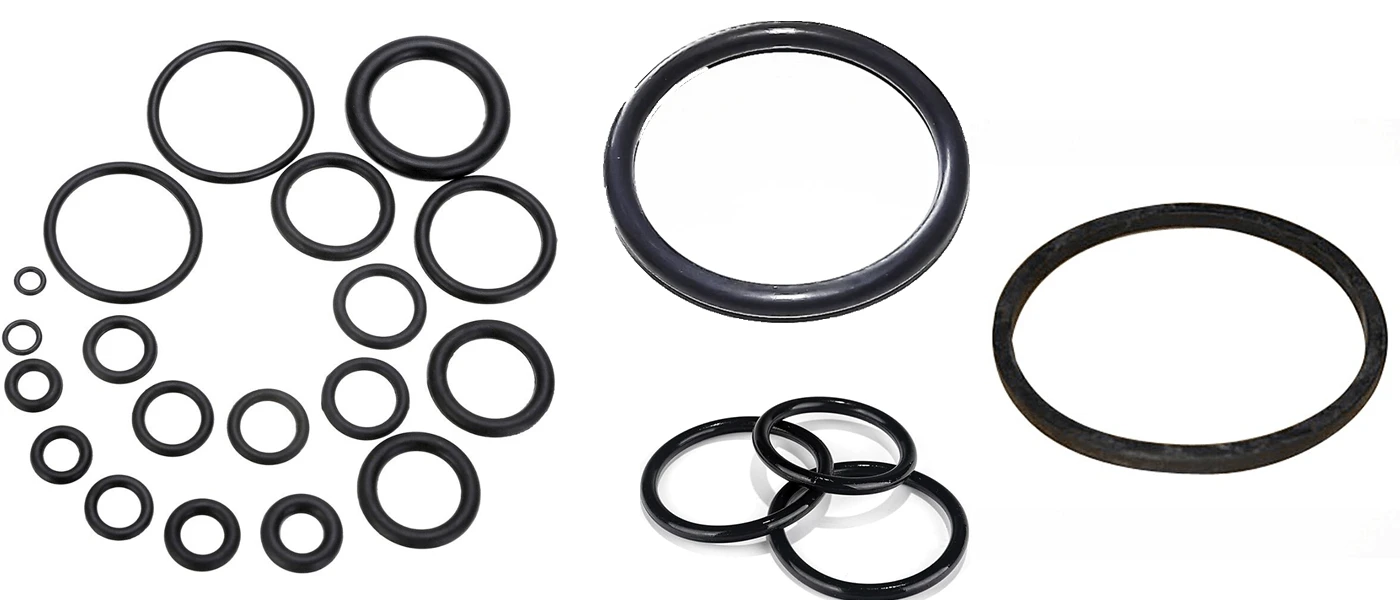
The O-ring is an annular sealing element with a circular cross-section and an O-shaped profile. It is made of elastic material rubber, and its ring-like structure allows it to generate radial compression when pressurized and form an effective seal.
Material selection
Rubber material: Common O-ring materials include nitrile rubber (NBR), fluorine rubber (FKM), acrylic rubber (ACM), fluorosilicone rubber (FVMQ), etc. Different materials have different oil, heat, and chemical resistance properties and are selected based on application needs.
Sealing performance: Excellent O-ring material has good sealing performance and can provide stable sealing under different pressure and temperature conditions. At the same time, they also have a certain degree of elasticity and recovery to maintain a long-term sealing effect.
Application fields
- Engine system: O-rings play an important role in the engine system. They are widely used in cylinder heads, oil pans, cooling systems and fuel systems to ensure the sealing performance of various components and prevent liquid and gas leakage.
- Braking system: The braking system is a critical component of vehicle safety. O-rings are used in brake pistons, sealing covers and brake fluid transfer pipes to ensure the reliability and sealing performance of the braking system.
- Suspension system: Components such as shock absorbers, airbags, and hydraulic cylinders in the suspension system also require O-ring sealing to maintain the normal operation and stability of the system.
- Fuel system: The fuel system of a car includes fuel tanks, fuel pumps, fuel injectors and other components. O-rings are widely used in these locations to ensure the sealing and reliability of the fuel system.

Advantages and Importance
- Reliable Sealing Performance: The O-ring demonstrates excellent sealing performance and guarantees effective leak prevention of both liquid and gas in diverse working conditions, ensuring seamless and safe system operation.
- Wide Adaptability: The O-ring's varied structures and material options make it suitable for several working environments and applications. Whether in high-temperature, high-pressure, or chemically-corrosive environments, suitable materials and designs can be selected to meet specific needs.
- O-rings are a cost-effective and easy-to-install sealing element in the automobile industry.
- Improved system efficiency is achieved as O-rings reduce energy loss and minimize decreases in system performance. They ensure that liquids and gases flow correctly through the system, reducing leaks and pressure losses.
- The high-quality O-ring material has magnificent durability and anti-aging properties, maintaining its sealing performance in long-term use. This reduces the system's repair and replacement costs and extends its lifespan.
In conclusion
O-rings are a crucial sealing component in the automotive industry. Their reliable performance prevents liquid and gas leakage, ensuring system safety, reliability, and efficiency. By choosing appropriate materials and designs, O-rings can adapt to different working environments and meet specific requirements. They are an economical, practical, and durable solution. Therefore, O-rings have a crucial role in enhancing vehicle performance and safety in the automotive industry, leading to the progress of the entire sector.


