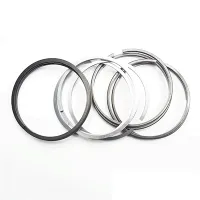
Technical advantages of rubber seals in camshaft systems
The technical advantages of rubber seals in camshaft systems are mainly reflected in the following aspects:
Excellent sealing performance: Rubber seals prevent lubricant leakage and the ingress of external contaminants, extending bearing life and keeping the system running efficiently. For example, traditional rubber seals have limited performance in high-pressure environments but can be optimized to significantly reduce fluid penetration and improve sealing effectiveness.
Material compatibility: Rubber seals are typically compatible with existing greases and have an outer diameter that matches standard dimensions for easy integration into existing systems. This compatibility reduces changes to the system architecture and reduces maintenance costs.
High temperature and corrosion resistance: Certain high-performance rubber seals, such as nitrile rubber and hydrogenated nitrile butadiene rubber, have excellent oil resistance, aging resistance, and high temperature resistance, making them suitable for harsh working environments. These properties make rubber seals excellent in high-load areas such as engine camshafts.
Low friction and low noise: Rubber seals are designed to reduce friction and noise. For example, some seals reduce metal-to-metal sliding contact by optimizing the contact surface design, resulting in lower operating temperatures and noise.
Eco-friendly and sustainable: Modern rubber seals use eco-friendly materials and comply with environmental standards such as RoHS 2.0, reducing their impact on the environment. In addition, the application of smart manufacturing technology improves production efficiency and product quality, further supporting environmental goals.
Adapt to complex working conditions: Rubber seals can cope with complex working conditions, such as high temperature, high pressure, and vibration. For example, some patented rubber seals effectively solve the problem of vibration leakage in the oil circuit by optimizing the structure and material.
Easy maintenance: Rubber seals are relatively simple to replace and inexpensive. Regular replacement of rubber seals can avoid engine damage and other failures due to leaks.
In summary, rubber seals have significant technical advantages in camshaft systems, including excellent sealing performance, material compatibility, high temperature and corrosion resistance, low friction and low noise, environmental friendliness, and the ability to adapt to complex working conditions. These advantages make it an indispensable key component in modern engine systems.