
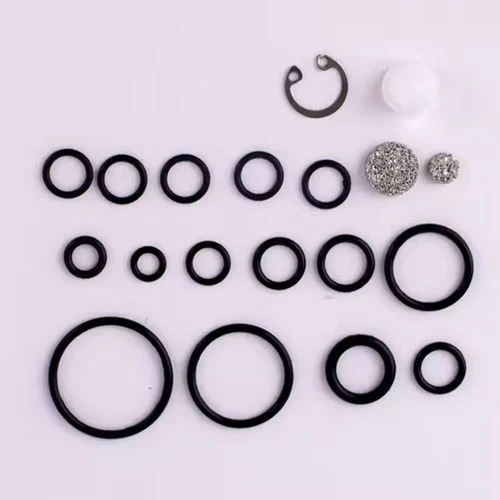


Submersible breathing regulator seals: the key to safe breathing underwater
In diving equipment, the seals of the regulator are the core components to ensure zero gas leakage and maintain the breathing safety of the diver. These seals are designed with precision and high-performance materials to ensure reliable gas transmission by maintaining stability in high-pressure, low-temperature, and corrosive environments. As a professional supplier of rubber seals, we deeply analyze the core technology, material advantages, and industry trends of respiratory regulator seals, and help global diving equipment manufacturers optimize product performance.
Core material: excellent performance of specialty rubber
Regulator seals need to adapt to extreme environments, so they mostly use special materials such as medical-grade silicone and fluoroelastomer (FKM), which have far more characteristics than ordinary rubber:
High pressure and low-temperature resistance: The working pressure range covers 200-300 bar (such as the high-pressure interface of the first stage head connected to the gas cylinder), which is suitable for deep sea high pressure and polar low temperature (such as -5°C to 50°C environment).
Nitrox compatibility: In line with EN12021 and EN144-3 standards, it supports nitrox with more than 40% oxygen concentration to avoid potential safety hazards caused by material oxidation.
Chemically resistant: Resists seawater salt, chloride ions (pool environment), and lubricants for a longer service life.
Low compression set: Ensures fast rebound and tightness (<20% under ASTM D395) after long-term compression.

Innovative design: dynamic sealing and functional integration
The seal design of modern regulators combines fluid mechanics and ergonomics to cover critical areas:
Key sealing nodes
First-stage head interface: O-rings at the DIN/INT connection ensure high-pressure airtightness between the cylinder and the regulator and support a working pressure of 300 bar.
Two-stage head diaphragm valve: Silicone diaphragm dynamically responds to negative breathing pressure, accurately controls gas flow, and reduces breathing resistance.
Low-pressure pipeline-interface: double-layer sealing structure (main seal + secondary buffer) to prevent medium-pressure gas leakage, suitable for BCD inflation valve, spare secondary head (Octopus), and other multi-functional expansion.
Technological breakthroughs
Intelligent early warning sealing system: integrated miniature sensors can monitor the risk of seal aging or leakage in real-time to improve safety.
Modular quick-release design: Magnetic insert sealing technology supports quick maintenance and avoids damage to the sealing surface during disassembly.
Production process: precision manufacturing and strict quality inspection
From raw material to finished product, seals need to be guaranteed through rigorous processes:
Compression molding: Precision tooling ensures dimensional consistency and adapts to complex curved surfaces (e.g., the miniature groove of diaphragm valves).
High-temperature vulcanization: enhances the cross-linking structure of the molecule, and improves the pressure resistance and resilience (such as the secondary vulcanization process of fluoroelastomer).
Surface treatment: Plasma coating technology optimizes the smoothness of the sealing surface, reduces friction loss, and prolongs life.
Whole-process testing: passed high-pressure air tightness test (IP68 standard), Shore hardness test (40±5A), and high oxygen compatibility certification (EN13949).
| Material | Pressure | Hardness | Air tightness test |
| Silicone, FKM | 300 bar | 40±5 Shore A | IP68 |
Application scenarios and market trends
Mainstream application fields
Recreational diving: Lightweight regulators rely on a high-elastic silicone seal for improved comfort and responsiveness.
Professional deep diving: 300 bar high-pressure seals support deep-sea scientific research and military missions.
Nitrox diving: Special fluoroelastomer seals are suitable for 40%-100% oxygen concentration and meet EN144-3 specifications.
Future trends of the industry
Eco-friendly materials: Develop bio-based degradable rubber to respond to global sustainable development needs.
Customized service: according to customer needs, hardness, color, and size customization (such as 30A-60A gradient selection).
Intelligent upgrade: Embedded RFID tags track seal life for preventive maintenance.
Maintenance recommendations and common problem-solving
The key to extending the life of seals lies in scientific maintenance:
Cleaning and storage: rinse with fresh water after diving to avoid salt crystallization; Use a UV-protected box during storage to delay the aging of the material.
Troubleshooting: In case of leaks, check them in order:
1. Foreign matter on the sealing surface (e.g. sand or salt slag, 42%).
2. Change in hardness of the material (Shore hardness test).
3. Installation errors (e.g., distorted or misaligned O-rings).
Replacement standard: Forced replacement when the tensile strength drops to 70% of the initial value or when surface cracks appear.
Why Choose Our Regulator Seals?
Full cycle support: Provide one-stop solutions from material selection to mold development.
International certifications: ISO 18527-1, FDA, and EN13949 certifications for global market access.
Quick response: support small batch customization and 24 hours sample delivery.
Hot Tags: submersible breathing regulator seals, China submersible breathing regulator seals manufacturers, suppliers, factory, Door and Boot Long Wiring Grommet, Automobile ACM Rubber Seals, Tire SBR Rubber Seal Ring, Aviation AEM Rubber Seals, Bulkhead Firewall Grommet Plug Connector, Gas oil seals FKM rubber


