



Linde Polymer Tec Co.,Ltd. is one of the most experienced manufacturers and suppliers of brake master cylinder seals in China, also supports customized service. Please feel free to buy high quality brake master cylinder seals for sale here from our factory.
Brake master cylinder seals Description
Brake master cylinder seals are an important part of an automaker's braking system, and it plays a key role in ensuring that the braking system works properly and drives safely. This article will detail the function, structure and material selection of brake master cylinder seals.
Function introduction
| Product name | Brake master cylinder seals |
| Product material | FFKM EPDM HNBR / Other rubber / Custom |
| Hardness (Shore A) | 20 to 90 |
| Applicable temperature °C | -50 to 140 |
| Color | Black, orange, blue, yellow, green, custom |
| Size | Standard/ Custom |
| Advantage | High temperature resistance, Abrasion resistance, Corrosion resistance, Elastic performance |
| Application | such as cars, commercial vehicles, heavy-duty vehicles, etc |
| Certification | ISO: 9001, ISO: 14001, IATF: 16949 |
The main function of the brake master cylinder seal is to ensure that the brake fluid does not leak during the working process of the brake master cylinder, maintain the tightness of the braking system, and maintain the normal pressure transmission and braking force output, so as to achieve the braking of the vehicle. It plays a role in preventing brake fluid leakage and external impurities from entering the braking system, and effectively ensures the reliability and stability of the braking system.
Structural composition
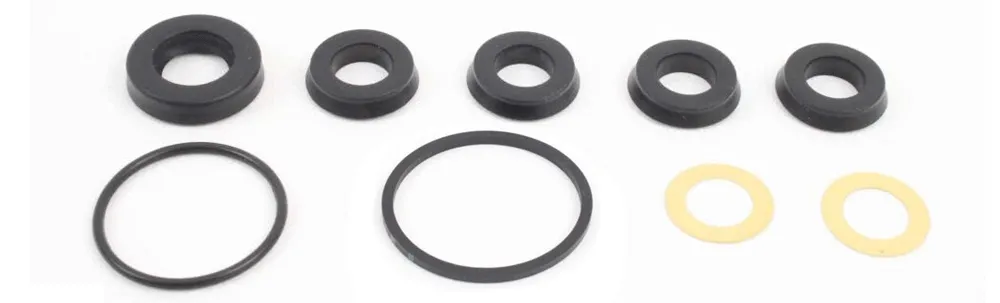
Brake master cylinder seals typically consist of a primary seal, an auxiliary seal, and an O-ring. The main seal is located on the piston of the brake master cylinder and is responsible for preventing brake fluid from leaking from around the piston. The secondary seal is located below the main seal and is used to prevent brake fluid from entering the seal chamber below the main seal. O-rings are mainly used to maintain a tight connection between the seal and the brake master cylinder housing to prevent leakage and impurities.
Material selection
The material selection of the brake master cylinder seal is critical, as it needs to have excellent oil resistance, abrasion resistance, high temperature resistance and aging resistance. Common sealing materials include rubber, polyurethane, and fluoroelastomer. Rubber seals have good sealing performance and wear resistance, polyurethane seals have good oil resistance and high temperature resistance, and fluoroelastomer seals have good oil resistance, high temperature resistance and corrosion resistance.
Maintenance and replacement
The maintenance and replacement of brake master cylinder seals is an important part of ensuring the proper operation of the braking system. In daily use, the brake master cylinder seals should be checked regularly for leaks or damage. If leakage or problems such as aging and hardening of the seal are found, the seal should be replaced in time so as not to affect the braking performance and safety. Here are some maintenance recommendations:
1. Regularly check the degree of wear of the brake master cylinder seals. If the seal is found to be cracked, deformed or worn, it should be replaced in time.
2. Pay attention to the quality and level of the brake fluid. The brake fluid should be changed regularly and ensure that the fluid level is within the normal range to ensure the normal operation of the braking system.
3. Avoid using inappropriate chemicals. Some chemicals, such as acids and alkalis, can have a corrosive effect on seals, so avoid contact with them.
4. Avoid pressing the brake pedal excessively. Excessive application of the brake pedal will increase wear on the brake master cylinder seals and should be avoided as much as possible.
5. Regular maintenance of the braking system. This includes cleaning the brake master cylinder and checking the brake lines to ensure the normal operation of the entire braking system.

Precautions
When replacing the brake master cylinder seals, it should be done in strict accordance with the manufacturer's regulations. At the same time, care should be taken to avoid using unsuitable cleaning agents and lubricants to avoid damaging the seals or affecting their sealing performance. In addition, seals should be installed in the correct position and orientation to avoid distortion or damage.
Summary
Brake master cylinder seals are indispensable key components in the automotive braking system, and it plays an important role in ensuring the normal operation of the braking system and safe driving. The reliability and stability of the braking system can be ensured through the rational selection of materials, regular maintenance and timely replacement of seals. In the process of use, we need to pay attention to the status of the seal, find the problem in time and take corresponding measures to ensure driving safety.

Here are some frequently asked questions about brake master cylinder seals and their answers:
Q: What is a brake master cylinder seal?
A: The brake master cylinder seal is a part located inside the brake master cylinder to prevent brake fluid leakage. It plays the role of converting pressure into effective braking force.
Q: Why are brake master cylinder seals important?
A: The normal operation of the brake master cylinder seal is the key to ensure the normal operation of the brake system. If the seals leak or are damaged, the brake fluid can leak or become contaminated, causing the brake system to fail, increasing the risk of accidents.
Q: How is the brake master cylinder seal damaged?
A: The brake master cylinder seal may be damaged due to a variety of reasons, including wear and tear caused by long-term use, aging, chemical corrosion, high temperature, oil seal cracking, etc. In addition, the use of unsuitable brake fluid or improper maintenance can also lead to damage to the seals.
Q: How can I check if the brake master cylinder seal is damaged?
A: A common way to check is to look around the brake master cylinder for signs of brake fluid leakage, such as wet surfaces, liquid dripping, or corrosion marks. In addition, whether the brake pedal is traveling abnormally or feeling abnormal can also be an indication of seal damage.
Q: Do I need to repair the seal if it is damaged?
A: Yes, if the brake master cylinder seal is damaged, it is recommended to repair or replace it immediately. Damage to the seals can lead to the failure of the braking system, which is very dangerous for driving safety. It is best to take the vehicle to a professional car repair shop for inspection and repair.
Q: How to prevent damage to the brake master cylinder seal?
A: Here are some common ways to prevent seal damage:
1. Change the brake fluid regularly and maintain it according to the manufacturer's recommendations.
2. Avoid using inappropriate brake fluids and make sure to use the type of brake fluid recommended by the car manufacturer.
3. Avoid over-pressing the brake pedal to reduce pressure damage to the seals.
4. Avoid mixing impurities or contaminants in the brake fluid.
5. Store the vehicle properly and avoid parking in a humid or dusty environment for long periods of time.
Please note that the above information is for informational purposes only. If you have a more specific problem with your brake master cylinder seal or need to have it repaired, consult a professional automotive technician or go to an auto repair shop.
Hot Tags: brake master cylinder seals, China brake master cylinder seals manufacturers, suppliers, factory, Refinery High Temperature Valve Rubber FKM80 Seals, Automotive Fuel Tank Seals, Exhaust Pipe Rubber Seals, Rubber Seal Inside Pump, Aerospace O rings And Seals, EPDM Rubber O Rings


