

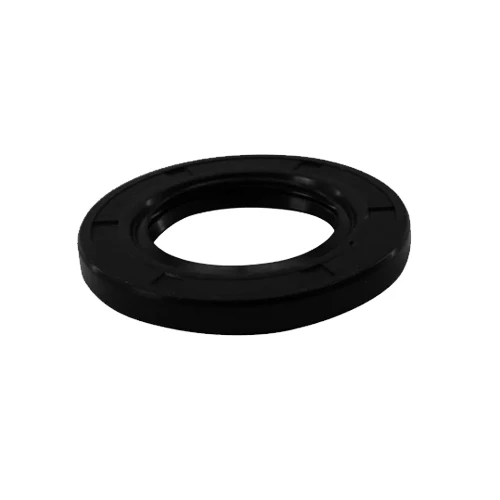


Linde Polymer Tec Co.,Ltd. is one of the most experienced manufacturers and suppliers of auto car rear axle fkm seals in China, also supports customized service. Please feel free to buy high quality auto car rear axle fkm seals for sale here from our factory.
Products rear axle FKM Seals Description
Auto rear axle FKM Seals
The following rubber seal accessories may be used on your car's rear axle
- Differential seal: The differential is one of the core components of the rear axle system and is used to distribute driving force to the wheels. Differentials often require the use of rubber seals to ensure internal lubricants do not leak and to prevent outside contaminants from entering.
FKM (Fluoro Rubber) seals are commonly used in differentials on the rear axle of automobiles. The differential is one of the key components of the rear axle system. It is responsible for distributing drive power to the wheels so that the vehicle can turn and turn smoothly.
Due to the presence of lubricant inside the differential, seals are required to ensure that the lubricant does not leak and to prevent external contaminants from entering the interior of the differential. FKM seals are made of fluoroelastomer, which has excellent oil, high temperature, and chemical resistance and can withstand the requirements of the differential's internal lubricant.
Differential seals are usually located in key locations such as the differential housing, differential gear shaft, and differential input shaft.
FKM seals can effectively prevent lubricating oil leakage, maintain the normal working condition of the differential, and prevent dust, moisture, and other external substances from entering the interior of the differential, protecting the service life and reliability of the differential.
It should be noted that the specific FKM seal accessories used may vary depending on the vehicle model, manufacturer, and differential design.
- Bearing seals: Bearings on the rear axle usually require the use of rubber seals to prevent lubricant leakage and prevent dust, moisture, and other external substances from entering the inside of the bearing.
Bearing seals usually use seals made of FKM (Fluoro Rubber) material. FKM seals have excellent oil resistance, high-temperature resistance, and chemical resistance, and are suitable for applications requiring higher wear resistance and high-temperature resistance.
The main function of the bearing FKM seal is to prevent lubricant leakage and block dust, moisture, and other contaminants from entering the inside of the bearing to protect the normal operation and life of the bearing. Bearing seals are usually located between the bearing outer ring and the bearing seat to form a sealed environment to prevent lubricant leakage and the intrusion of external contaminants.
FKM seals have excellent oil resistance and can work in lubricating oil environments for a long time without being damaged. In addition,
FKM seals also have good high-temperature resistance and can maintain good sealing performance under high-temperature conditions. This makes FKM seals widely used in bearing sealing applications on the rear axle of automobiles.
- Hub seals: The hubs on the rear axle usually also use rubber seals to protect the bearings and the inside of the hub from the intrusion of dust, moisture, and other external environments.
The main function of the wheel hub seal is to prevent dust, moisture, and other contaminants from entering the interior of the wheel hub and protect the wheel hub bearings and other key components.
FKM seals are made of fluoroelastomer and have excellent oil, high temperature, and chemical resistance. This allows FKM seals to provide reliable sealing performance under the working conditions of the wheel hub and prevent the external environment from affecting the inside of the wheel hub.
Hub FKM seals are usually located between the hub and hub shaft to form a sealed environment. It blocks dust, moisture, and other contaminants from entering the wheel hub to protect wheel bearings and other critical components from damage. At the same time, FKM seals can also prevent the leakage of lubricant inside the wheel hub and maintain the normal operation of the lubrication system.
It should be noted that the specific FKM seal accessories used may vary depending on the vehicle model, manufacturer, and wheel design.
- Brake component seals: Brake components on the rear axle, such as brake calipers, brake cylinders, etc., usually require the use of rubber seals to ensure the normal operation of the brake system and prevent brake fluid leakage.
Braking components of automobile rear axles, and FKM (Fluoro Rubber) seals are usually used to ensure the normal operation of the braking system. The main function of the brake component FKM seal is to prevent brake fluid leakage and maintain the sealing of the brake system.
FKM seals are made of fluoroelastomer and have excellent oil, high temperature, and chemical resistance. This allows FKM seals to withstand the requirements of brake fluid used in braking systems and maintain good sealing performance in high-temperature and high-pressure working environments.
Brake component FKM seals are usually located in key locations such as brake calipers and brake cylinders to prevent brake fluid leakage.
It ensures that the brake fluid in the brake system can be correctly transferred and released under pressure to achieve safe braking of the vehicle.
It should be noted that the specific FKM seal accessories used may vary depending on the vehicle model, manufacturer, and brake system design.
- Shaft seal: The shaft on the rear axle usually requires a shaft seal to prevent lubricant leakage and prevent the intrusion of dust, moisture, and other external environments.
Products Testing Description
Automobile rear axle FKM seals usually need to pass a series of tests during the production process to ensure their quality and performance.
Sealing test: Test the sealing performance of FKM seals under different pressure and temperature conditions, including static sealing and dynamic sealing.
Oil resistance test: Evaluate the resistance of FKM seals to different types of lubricants and chemicals to ensure that they have good oil resistance in the working environment of the automotive rear axle.
Temperature resistance test: Test the FKM seal's ability to withstand high-temperature environments to ensure that it can maintain sealing performance and physical properties under the high-temperature conditions of the rear axle system.
Wear Resistance Test: Evaluate the wear resistance and life of FKM seals to ensure they do not experience excessive wear or damage during extended use in rear axle systems.
Chemical stability test: Test the stability of FKM seals against chemicals and environmental factors, including acidity, alkalinity, oxidation, etc., to ensure their stability and durability in various chemical environments.
Dimensional and geometric testing: Check the dimensions and geometry of FKM seals to ensure they meet design requirements and can be installed and sealed correctly.
| Property | Value | Unit |
| Hardness Shore A - Slab | 76.5 | |
| Hardness - Test standard | ASTM D2240 | |
| Compression set - Slab | 18 | % |
| Compression set - Duration @ temperature | 22 hours at 200°C | |
| Compression set Test standard | ASTM D395-B | |
| Elongation at break | 210 | % |
| Elongation at break - Test standard | ASTM D412 | |
| Tensile strength | 15.1 | MPa |
| Tensile strength - Test standard | ASTM D412 | |
| 100% Modulus | 6.5 | MPa |
| 100% Modulus - Test standard | ASTM D412 |
For more testing for standard and customized Auto rear axle FKM Seals, you can contact us for help.
Hot Tags: auto car rear axle fkm seals, China auto car rear axle fkm seals manufacturers, suppliers, factory, Automobile XNBR Rubber Seals, Piston Pump Rubber Seal, Automotive Valve Stem Seals, Air Suction Vacuum Packaging Machine O Rings, Magnetic Drive Pump FKM O Rings, Automotive Engine Coolant Line Seals
| Property | Value | Unit |
| Hardness Shore A - Slab | 76.5 | |
| Hardness - Test standard | ASTM D2240 | |
| Compression set - Slab | 18 | % |
| Compression set - Duration @ temperature | 22 hours at 200°C | |
| Compression set Test standard | ASTM D395-B | |
| Elongation at break | 210 | % |
| Elongation at break - Test standard | ASTM D412 | |
| Tensile strength | 15.1 | MPa |
| Tensile strength - Test standard | ASTM D412 | |
| 100% Modulus | 6.5 | MPa |
| 100% Modulus - Test standard | ASTM D412 |


