
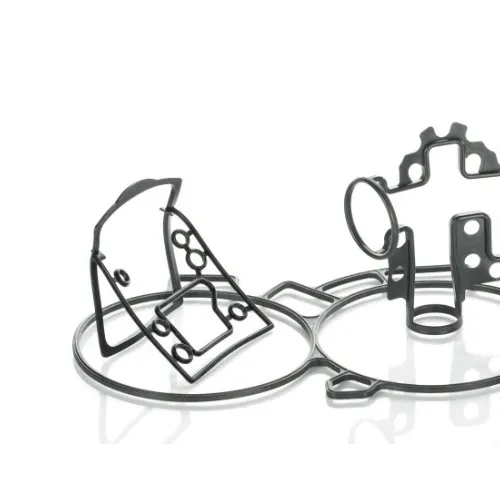


Products automotive hydraulic systems AEM Rubber seals Description
automotive hydraulic systems AEM Rubber seals
Hydraulic Cylinders: AEM rubber seals are used as sealing elements of hydraulic cylinders to ensure that hydraulic oil does not leak during work. They are usually installed between the piston and cylinder block of the hydraulic cylinder to provide reliable sealing performance to ensure the normal operation of the hydraulic system.
Valves: In automotive hydraulic systems, AEM rubber seals are also used to seal valves. The purpose of valve seals is to prevent fluid leakage in hydraulic systems while ensuring the normal operation of the valve. AEM rubber seals can provide good sealing performance and durability to adapt to the high-pressure and high-temperature environment of hydraulic systems.
Pumps: AEM rubber seals are also widely used in pumps in automotive hydraulic systems. The function of the pump seal is to prevent liquid leakage in the hydraulic pump and ensure the normal operation of the pump. AEM rubber seals can withstand the requirements of high pressure and high-speed movement, providing reliable sealing performance.

Materials Data sheet Refers AEM
| AEM Ethylene-acrylic rubber, black | |||
| Especially to seal service fluids in vehicle construction Resistant to acidic oils and gases, to cold water, to most chemicals and heat Applicable for static seals, rod and piston seals, wiper seals and rotary seals |
|||
| Properties | Value | Unit | DIN Standard |
| Hardness | 87 ± 5 | Shore A | DIN ISO 7619-1 |
| Density | 1,305 | g/cm³ | DIN EN ISO 1183-1 |
| 100% Modulus | 10 | MPa | DIN 53504 |
| Elongation at break | 192 | % | DIN 53504 |
| Tensile strength | 10 | MPa | DIN 53504 |
| Rebound resilience | 22 | % | DIN ISO 4662:2017 |
| Tear resistance | 59 | N/mm | DIN ISO 34-1 A |
| Abrasion resistance | mm³ | DIN ISO 4649 B | |
| min. Service temperature | - 30 | °C | |
| max. Service temperature | +150 | °C | |
| All the above-stated data result from random tests which were taken from the ongoing production. All data were established based on standard test specimens according to ISO, DIN, and ASTM standards and can not be carried over to the construction element. Refers only. |
|||
More details of AEM properties and Certification tolerate Description
Mechanical properties: AEM rubber seals have excellent mechanical properties, including higher strength and elastic modulus, as well as better wear and tear resistance. This allows them to withstand the high pressure and movement requirements in hydraulic systems, providing a reliable sealing effect.
Physical properties: AEM rubber seals have good physical properties, such as higher heat resistance and cold resistance. They maintain stable performance over a wide temperature range and work well in environments from low to high temperatures.
Chemical properties: AEM rubber seals have excellent chemical resistance and can resist the corrosion and dissolution of various liquid media. They have good compatibility with liquids, lubricants, and hydraulic fluids commonly found in hydraulic systems.
Processing performance: AEM rubber seals have good processing properties and can be made into seals of various shapes and sizes through compression molding, extrusion molding, and other processes. They can be easily matched with other components of the hydraulic cylinder to achieve an effective sealing effect.
As sealing components of automotive valves, AEM rubber seals need to pass some important certifications in the international market to ensure their quality and performance.
ISO/TS 16949: This is the quality management system certification standard for the automotive industry, requiring suppliers to adhere to a series of strict quality management requirements when designing, developing, producing, and supplying automotive parts.
ASTM D2000: This is the rubber material specification standard established by the American Society for Testing and Materials, including the physical properties, chemical properties, heat resistance, oil resistance, and other requirements of rubber seals.
SAE J200: This is a rubber seal material specification standard established by the Society of Automotive Engineers, which defines the classification and performance requirements of rubber materials.
FDA Certification: If AEM rubber seals are used in hydraulic systems in automotive applications that come into contact with food or drugs, they may be subject to U.S. Food and Drug Administration (FDA) certification requirements to ensure they meet food safety standards.
Quality Control
1. Raw material screening
Linde Polymer ensures the selection of high-quality AEM rubber material suppliers that meet the requirements and establishes a list of qualified suppliers. For each batch of raw materials, the factory conducts strict quality inspection and testing, including physical properties, chemical properties, etc., to ensure that it meets the required standards.
2. Production process control
Establish strict production technology and process control standards to ensure that every production link complies with regulations. Monitor key parameters such as temperature, pressure, speed, etc., and perform real-time monitoring and recording. Regularly maintain and calibrate production equipment to ensure normal operation.
3. Online testing and sampling inspection
During the production process, an automated online inspection system is set up to inspect the size, hardness, sealing performance and other aspects of rubber seals. At the same time, sampling inspection is carried out, and samples are randomly selected from the production batch for comprehensive testing to ensure that the products meet the specified quality standards.
4. Develop a plan for handling defective products
Classify, record, and analyze found defective products. Develop corresponding treatment plans, such as tracing the causes, improving processes, adjusting equipment, training operators, etc., to prevent similar problems from happening again.
5. Customer feedback and monitoring
Maintain close communication with customers and keep abreast of product usage and customer feedback. For customer complaints or quality problems, respond and handle them quickly to ensure timely correction and take measures to avoid similar problems from happening again.
6. Continuous improvement and training
Establish a mechanism for continuous improvement, conduct regular quality management reviews, analyze root causes of problems, and formulate improvement plans. At the same time, employee training is conducted to improve employees' quality awareness and skill levels to ensure that they can correctly implement the quality management process.
Hot Tags: automotive hydraulic systems aem rubber seals, China automotive hydraulic systems aem rubber seals manufacturers, suppliers, factory, Oil Exploration Well Equipment O ring, Extra High Pressure Pump System Seals, O Rings For Endoscopes, Aircraft Engine O Rings, FFKM Rubber O Rings For Semiconductor, EPDM Rubber O Rings


