



Linde Polymer Tec Co.,Ltd. is one of the most experienced manufacturers and suppliers of automotive half-shaft seals in China, also supports customized service. Please feel free to buy high quality automotive half-shaft seals for sale here from our factory.
Automotive half-shaft seals Description
Automotive half-shaft seals play an important role in the automotive industry. These seals are located on the half shaft of the car and are used to prevent lubricant leakage and external contaminants from entering the half shaft area. Their design and performance are essential to ensure the proper functioning of the car and improve driving safety. In this article, we'll look at the features, common materials, and manufacturing processes of automotive half-shaft seals.
| Product name | Automotive half-shaft seals |
| Product material | FFKM EPDM HNBR / Other rubber / Custom |
| Hardness (Shore A) | 20 to 90 |
| Applicable temperature °C | -50 to 140 |
| Color | Black, orange, blue, yellow, green, custom |
| Size | Standard/ Custom |
| Advantage | High temperature resistance, Abrasion resistance, Corrosion resistance, Elastic performance |
| Application | Transmission system of various types |
| Certification | ISO: 9001, ISO: 14001, IATF: 16949 |
First of all, the main function of automotive half-shaft seals is to prevent lubricant leakage. On the half shaft of a car, lubricants are used to reduce friction and wear and ensure the proper operation of the half shaft. Seals maintain the integrity of the lubrication system by creating a sealing barrier that prevents lubricant from escaping from the half-shaft area. In addition, seals prevent external contaminants such as dust, moisture and impurities from entering the half-shaft area to protect internal components from damage.
To meet these functional requirements, automotive half-shaft seals are often made of high-performance materials. Common sealing materials include rubber, silicone, and polytetrafluoroethylene (PTFE). Rubber is a commonly used sealing material with good elasticity and wear resistance, and is able to adapt to different temperature and pressure conditions. Silicone seals have good high temperature resistance and chemical stability, and are suitable for sealing requirements in high temperature environments. PTFE seals have good chemical resistance and low coefficient of friction, making them suitable for high-speed rotation and high-temperature environments.
The process of manufacturing automotive half-shaft seals typically includes steps such as mold design and manufacturing, material forming, and post-processing. First of all, according to the design requirements of the seal, the manufacturer will design and manufacture molds for different models and models. Depending on the shape and size of the seal, the mold can transform the raw material into the final form of the seal through molding methods such as injection molding or extrusion. During the molding process, parameters such as temperature and pressure need to be controlled to ensure that the seal has good sealing performance and dimensional accuracy.

Once formed, seals often require post-treatment processes such as heat treatment, vulcanization, and surface treatment. These processes can improve the physical properties and durability of seals. For example, heat treatment can improve the strength and hardness of seals, vulcanization can increase the wear resistance and elasticity of rubber seals, and surface treatment can increase the corrosion resistance of seals and reduce the coefficient of surface friction.
In conclusion, automotive half-shaft seals are an important part of ensuring the normal operation and driving safety of the car. They protect the integrity of the lubrication system and internal components by preventing lubricant leakage and external contaminants from entering the half-shaft area. Seals made of high-performance materials are able to adapt to different operating conditions and environmental requirements. The process of manufacturing automotive half-shaft seals includes steps such as mold design and manufacturing, material forming, and post-processing. Precise control and quality assurance of these processes are essential to ensure the performance and reliability of the seals.
In the future, with the development of the automobile industry and the progress of technology, automotive half-shaft seals will continue to innovate and improve. For example, the development and application of new materials will further improve the wear resistance, high temperature resistance and chemical resistance of seals. In addition, new manufacturing processes and technologies, such as 3D printing and automated production lines, are also expected to improve manufacturing efficiency and product quality.
In conclusion, automotive half-shaft seals play an important role in the automotive industry. Their function is to prevent lubricant leakage and external contaminants from entering the half-shaft area to ensure the proper operation of the car and improve driving safety. The selection of materials for seals and the control of the manufacturing process are critical to the performance and reliability of seals. As technology continues to evolve, automotive half-shaft seals will continue to innovate and improve to adapt to the changing needs of the automotive industry.
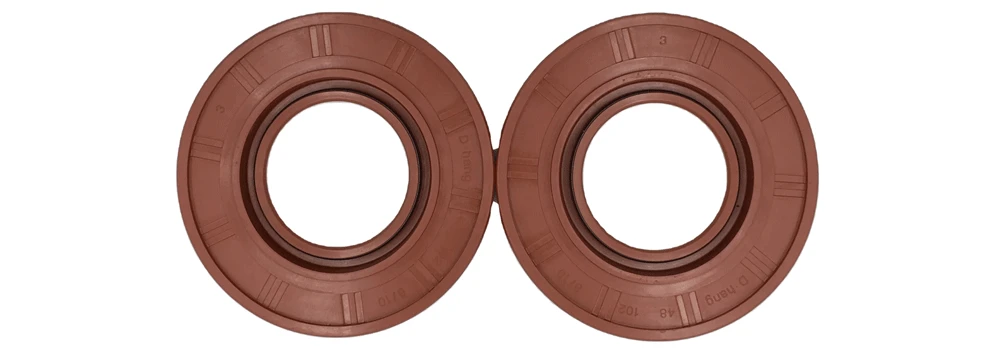
When it comes to automotive half-shaft seals, here are some frequently asked questions and their answers:
What is an automotive half-shaft seal?
An automotive half-shaft seal is a component used to seal between a half-shaft and a transmission component. It sits at the end of the half-shaft and prevents lubricating oil or other fluids from escaping from the drivetrain, while preventing the ingress of dust, moisture, and other impurities.
How do I know if a car half-shaft seal needs to be replaced?
In general, half shaft seals may need to be replaced if you notice the following:
Oil stains were found near the end of the half shaft or transmission parts.
You notice liquid dripping on the ground after your vehicle has stopped.
You smell the smell of fuel or lubricants.
You notice oil stains or accumulated dust around the half shaft.
How do I replace a car half shaft seal?
Replacing automotive half-shaft seals often requires a certain amount of expertise and tools. In general, here are the approximate steps of the replacement process:
Lift the vehicle and ensure safety.
Disassemble the relevant parts to gain access to the half-shaft seals.
Removing the old halfshaft seal from the halfshaft may require the use of appropriate tools.
Clean the half shaft and the surrounding area, making sure it is clean.
Install the new half-shaft seals and make sure they are properly installed and sealed.
Reinstall and tighten the relevant parts.
Lower the vehicle and test if the new seals are effective.
Is it possible to replace the car half shaft seal myself?
Replacing automotive half-shaft seals requires a certain amount of expertise and experience. If you don't have relevant experience in car repair, it is advisable to seek help from a professional technician. They have the right tools and skills to ensure that the seals are installed correctly to avoid any potential problems.
What is the life of a half-shaft seal?
The lifespan of a half-shaft seal varies depending on a number of factors, including driving conditions, time of use, and build quality, among others. In general, the life of a half-shaft seal can last from tens of thousands of miles (or years) to hundreds of thousands of miles. However, if you notice any leaks or other issues, the seals should be inspected and replaced as soon as possible.
Please note that these answers are for informational purposes only and may vary by model and manufacturer. Always refer to the relevant vehicle manufacturer's manual or consult a professional technician before carrying out any repair or replacement work.
Hot Tags: automotive half-shaft seals, China automotive half-shaft seals manufacturers, suppliers, factory, HNBR RGD O Ring For Vlave, Copper O Ring Conductive Sealing Ring, Cylinder Rubber U Ring, Submarine Cable Penetration O Ring, Tap Spout O Rings, Car A C Refrigerant Line O Ring


