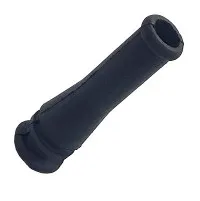
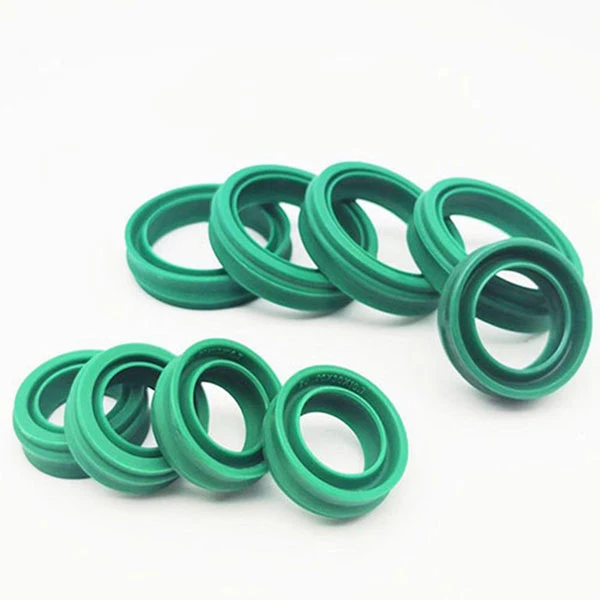


Products Description
| Product Name | Description | Capabilities Applied/Processes | Overall Dimensions |
| Pneumatic Buffer Seals | buffer seals provide end-of-stroke shock absorption in the cylinder without the need for a check valve | Machinery and equipment applications | Standard size |
| Color | Black, Green, Blue, etc |
| Material Used | PU |
| Benefits |
Excellent wear and tear resistance |
| In-process testing performed | Customer Life-Test |
| Standards Met | RMA Standards |
| Application |
Mainly used in cylinders and valves |

Introduction to Pneumatic Buffer Seals
Advantages
1. Special material properties
2. Wide range of applications
3. Excellent wear resistance and tear resistance
Application
Pneumatic buffer rubber seals are widely used in various fields of the national economy, and the direct application fields include construction machinery, coal mining machinery, automobiles, industrial automation, cylinders, and valves, and other equipment manufacturing fields.
Pneumatic buffer seals made of polyurethane sealing materials are very impact-resistant and wear-resistant, and have good flexibility in low-temperature environments, which increases the life of the seal components and is very easy to install. Its working medium, such as air or lubricating air, mineral oil, grease, and non-corrosive gas, the working speed range is less than or equal to 1m/s; the working pressure range is 1.6mpa.

FAQs
Q1: What is a pneumatic buffer seal?
A1: A buffer seal is a seal used in pneumatic systems. It is installed in a pneumatic cylinder or pneumatic cylinder to control gas flow and provide a buffering effect.
Q2: What is the function of a pneumatic buffer rubber seal?
A2: The main function of the pneumatic seal is to control the movement of the pneumatic cylinder or pneumatic cylinder and provide a buffering effect. It reduces cylinder shock and vibration, extends cylinder life, and provides smoother and more stable motion.
Q3: Which industries and application fields are pneumatic buffer rubber seals suitable for?
A3: Pneumatic buffer rubber seals are widely used in various industries and application fields, including industrial automation, machinery and equipment, automobile manufacturing, aerospace, etc. They are commonly found in pneumatic buffer devices, pneumatic shock absorbers, pneumatic vibration control systems, etc.
Q4: What is the working principle of a pneumatic buffer rubber seal?
A4: Pneumatic seal controls the inflow and outflow of gas by forming a seal in the pneumatic cylinder or pneumatic cylinder. When the pneumatic cylinder or pneumatic cylinder moves, the buffer seal will slow down the speed of the movement and reduce impact force and vibration by buffering the pressure changes of the gas.
Q5: What is the material of the pneumatic buffer seal?
A5: Pneumatic seals are usually made of wear-resistant, high-pressure-resistant, and chemical-resistant rubber materials, such as PU, NBR (nitrile butadiene rubber), or Viton (fluorine rubber). Material selection depends on the specific application environment and requirements.
Q6: How often should the rubber buffer seal be maintained and replaced?
A6: The frequency of maintenance and replacement of pneumatic buffer rubber seals depends on the use conditions, workload, and durability of the seal material. Regular inspections, and maintenance and replacement as necessary, are generally recommended to ensure proper operation and performance of the seal.
Hot Tags: pneumatic buffer seals, China pneumatic buffer seals manufacturers, suppliers, factory, Pneumatic Seals, Pneumatic Buffer Seals