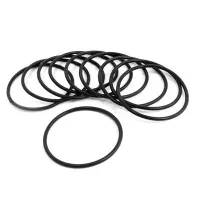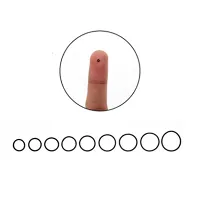
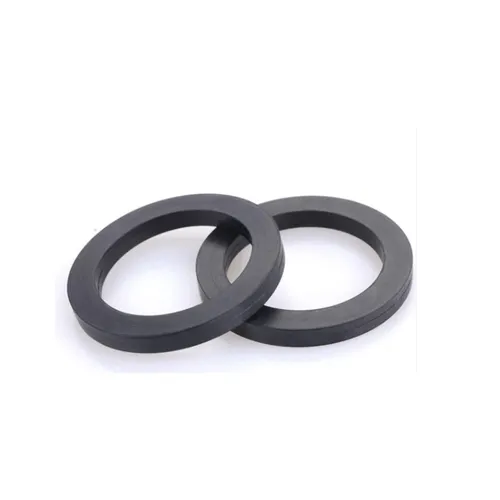
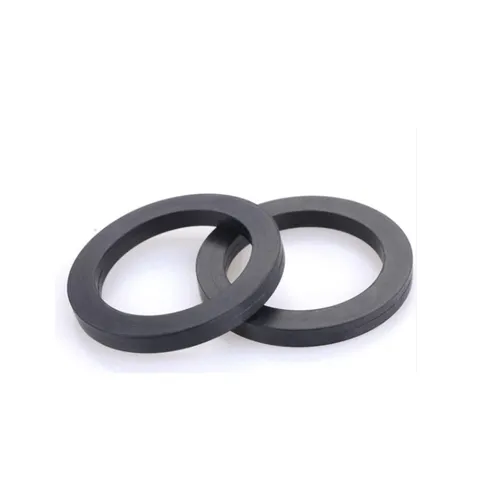
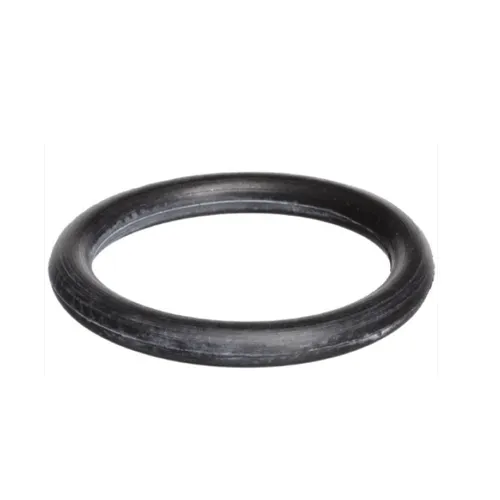
Medical Customized Urine-Resistant EPDM Rubber Ring
Products Details
1.Applications
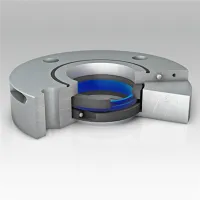
EPDM rubber rings are widely used in medical equipment, especially in scenarios where resistance to chemical corrosion and high temperature environments is required. For example, they are often used in seals of medical devices to ensure the reliability and durability of the equipment during sterilization and chemical treatment. In addition, EPDM rubber rings are also suitable for sanitary products, marine equipment, petroleum equipment, telecommunications equipment, instrumentation and machinery.

2. Material Performance
EPDM (ethylene propylene rubber) has the following main performance characteristics:
- Chemical corrosion resistance: EPDM has good resistance to chemicals such as weak acids, alkalis, alcohols, and also shows excellent tolerance to biological fluids such as urine.
- Aging and weather resistance: EPDM has excellent resistance to ozone and UV rays, and can maintain elasticity in extreme temperature ranges.
- High and low temperature resistance: EPDM's operating temperature range is generally -70°C to +260°C, suitable for a variety of temperature environments.
- Non-toxic and non-allergenic: EPDM materials comply with FDA standards and are suitable for contact with food or for use in medical products.
- High elasticity: EPDM has good tensile strength and elasticity, and its recovery capacity is around 300%.
3. Applicable area accessories
- Medical equipment: EPDM rubber rings are often used for seals in medical equipment, such as blood pressure monitors, infusion pumps, and other equipment that requires chemical resistance.
- Hygiene products: Suitable for seals in hygiene products such as baby diapers and adult care products.
- Industrial applications: EPDM rubber rings are widely used in automotive parts, marine equipment, petroleum equipment, and telecommunications equipment.
- Food grade applications: EPDM materials comply with FDA standards and are suitable for use in food contact products.
4. Customization and processing
EPDM rubber rings can be customized to different sizes and shapes to meet specific application requirements. Common processing methods include molding and extrusion molding. In addition, the color of EPDM rubber rings is usually black or red, but white or other colors can also be provided upon request.
5. Precautions
- EPDM rubber rings are not recommended to come into contact with certain chemicals (such as molybdenum disulfide and freon) to avoid affecting their performance.
- When choosing EPDM rubber rings, pay attention to their hardness (Shore hardness 70±5 degrees) and applicable temperature range (-50℃ to +150℃) to ensure their reliability in specific environments.

Products FAQ Description
1. Why choose EPDM rubber as a medical component material resistant to urine corrosion?
EPDM (ethylene propylene diene monomer rubber) has excellent chemical corrosion resistance, especially good tolerance to uric acid, inorganic salts, bacterial metabolites, etc. in urine. At the same time, EPDM meets medical-grade biocompatibility standards (such as ISO 10993), is non-toxic, non-sensitizing, and suitable for contact with the human body.
2. How does EPDM rubber ring resist urine corrosion?
EPDM has a stable molecular structure, containing a saturated rubber backbone and a small amount of ethylene and propylene monomers, making it highly resistant to polar chemicals (such as acidic or alkaline components in urine). Its cross-linked network structure can also prevent swelling or degradation caused by chemical penetration.
3. What certifications do medical-grade EPDM rubber rings need to meet?
Usually, they need to pass ISO 10993 biocompatibility testing (cytotoxicity, sensitization, irritation, etc.), USP Class VI plastic material certification, and EU CE certification (such as medical device directives MDD or MDR) to ensure material safety and compliance.
4. What factors should be considered in the design when customizing urine-resistant EPDM rubber rings?
Sealing performance (such as compression set rate), dimensional accuracy, operating temperature (such as human body temperature or sterilization temperature), installation method (such as snap-on or embedded), and compatibility with other medical components need to be considered.
5. How long is the urine corrosion resistance life of EPDM rubber rings?
The life depends on the use environment (such as urine concentration, temperature, contact frequency) and material formulation. By optimizing the formula (such as adding anti-aging agents), customized EPDM rubber rings can be used stably in medical devices for more than 3-5 years.
6. How to verify the urine corrosion resistance of EPDM rubber rings?
Through laboratory simulation tests, the rubber rings can be immersed in artificial urine solutions, and their physical properties (such as tensile strength, hardness changes) and appearance (such as cracks, swelling) can be regularly tested to evaluate their chemical corrosion resistance.
7. Can EPDM rubber rings withstand medical sterilization processes?
Yes, EPDM has good high temperature resistance and chemical sterilization resistance. It can withstand high-pressure steam sterilization (such as 121°C saturated steam), ethylene oxide (EO) sterilization and gamma ray sterilization, but the material formula needs to be optimized according to the specific sterilization method.
8. What are the common shapes of customized EPDM rubber rings?
Common shapes include O-rings, rectangular rings, special-shaped sealing rings, etc., which can be designed according to the sealing requirements of medical equipment, such as catheter interfaces, ostomy bag seals, etc.
| Parameter name | Value / Description | Unit |
| Shore hardness | 70±5 | Shore A |
| Operating temperature range | -70°C to +260°C (typical) | |
| -50°C to +150°C (recommended for medical applications) | °C | |
| Elastic recovery | Approx. 300% | % |
| Chemical corrosion resistance | Excellent resistance to biological fluids such as weak acids, alkalis, alcohols, urine, etc. | - |
| Aging resistance | Resistant to ozone and UV rays, long-term elasticity | - |
| Biocompatibility | Compliant with FDA, ISO 10993, USP Class VI standards | - |
| Compression set | Not explicitly mentioned (depending on the specific product design) | % |
| Tensile strength | Not explicitly mentioned (depending on the specific formulation) | MPa |
| Elongation | Not explicitly mentioned (depending on the specific formulation) | % |
9. Which components in urine may affect the performance of EPDM rubber rings?
Uric acid, urea, inorganic salts (such as sodium chloride), bacterial metabolites (such as ammonia) and acidic/alkaline environments in urine may cause rubber aging or swelling. The chemical inertness of EPDM makes it naturally resistant to these components.
10. How to choose the hardness of EPDM rubber rings?
The hardness is usually selected according to the application scenario. Medical seals often use a Shore A hardness of 50-80. Lower hardness (such as 50A) provides better flexibility and sealing, while higher hardness (such as 80A) enhances wear resistance and pressure resistance.
11. How to ensure the biocompatibility of EPDM rubber rings during customization?
By selecting medical-grade raw materials, controlling impurity contamination during the production process, and conducting strict biocompatibility tests, ensure that the material is non-toxic and does not cause adverse reactions in the human body.
12. Will EPDM rubber rings release harmful substances during long-term use?
Medical-grade EPDM has undergone rigorous toxicity testing and will not release harmful substances under normal use. Its stable chemical structure makes it inert when in contact with urine or other body fluids.
13. How to clean and maintain urine-resistant EPDM rubber rings?
It is recommended to use a mild neutral detergent and rinse with clean water, and avoid using strong acids, strong bases or organic solvents. Regularly check the rubber rings for signs of wear or aging, and replace them in time to ensure sealing performance.
14. What are the advantages of EPDM rubber rings compared to other medical rubbers such as silicone?
Compared with silicone, EPDM has better chemical corrosion resistance, especially to polar substances such as urine. In addition, EPDM has lower cost and higher mechanical strength, which is suitable for medical scenarios that require long-term sealing.
15. What is the production cycle and cost of custom urine-resistant EPDM rubber rings?
The production cycle depends on the complexity of the mold design and the order volume, usually 2-4 weeks. The cost is affected by material grade, dimensional accuracy, customization difficulty and quantity. The price of medical-grade customized products is higher than that of ordinary industrial rubber rings, but the price-performance ratio is competitive in the medical field.
Hot Tags: medical customized urine-resistant epdm rubber ring, China medical customized urine-resistant epdm rubber ring manufacturers, suppliers, factory, X-Rings, Cylinder Gasket Seals, Tire Bead Locking Ring Seal, Holden Round Wiring Harness Firewall Grommet, Rubber Wiring Harness Sheath, TPU Pneumatic Sealling Rings