

Y-Ring Troubleshooting Guide: In-depth Analysis and Solution
As a vital sealing element in the hydraulic system, the performance of the Y-ring directly affects the stability and efficiency of the whole system. However, in practical applications, Y-rings often encounter various faults, such as oil leakage, wear, twisting, etc. This article will elaborate on how to solve the common problems of Y-ring seals from three aspects: fault performance, cause analysis and solutions.

Oil spills
Fault performance: One of the most common failures of Y-ring seals is oil leakage. Oil leaks can occur at the contact surface of the seal ring with the shaft or hole, causing the system pressure to drop and affect the work efficiency.
Causes:
Improper interference: Interference that is too large or too small can lead to a poor seal. When the interference amount is too large, the sealing ring is easy to produces excessive friction and dry friction, which accelerates wear; If the interference amount is too small, an effective seal cannot be formed.
Surface roughness: Excessive roughness of the sealing surface will aggravate the wear of the sealing ring and lead to oil leakage.
Foreign body contamination: The presence of dust and foreign matter between the sealing surfaces will destroy the sealing effect.
Solution:
Adjust the interference: according to the specific working conditions, reasonably adjust the interference between the Y-ring seal ring and the shaft or hole to ensure that it is neither too tight nor too loose.
Optimize the surface roughness: ensure that the roughness of the sealing surface is in the range of Ra0.2~0.4μm to improve the sealing effect.
Keep it clean: Regularly clean the sealing surface to remove dust and foreign matter and maintain the cleanliness of the sealing surface.
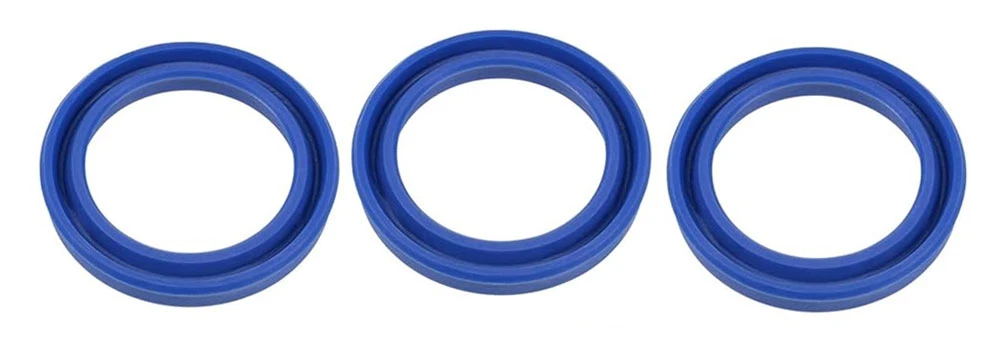
Wear and tear issues
Failure manifestation: The root or lip of the Y-ring seal is worn, resulting in a decrease in sealing performance.
Causes:
Excessive pre-compression: When the pre-compression is too large, the sealing ring is subjected to excessive pressure and is prone to wear.
Eccentric load: Under the action of eccentric load, the sealing ring produces large wear at the position of the load concentration.
Hydraulic Oil Contamination: Dirt in hydraulic fluid can accelerate the wear of seals.
Solution:
Reasonable selection of pre-compression amount: According to the material and working conditions of the sealing ring, the pre-compression amount should be reasonably selected to avoid being too large or too small.
Set the dust ring: Set the dust ring at the extended end of the piston rod to prevent dirt from entering the hydraulic cylinder.
Wear-resistant materials: use sealing ring materials with good wear resistance, such as PTFE, etc.
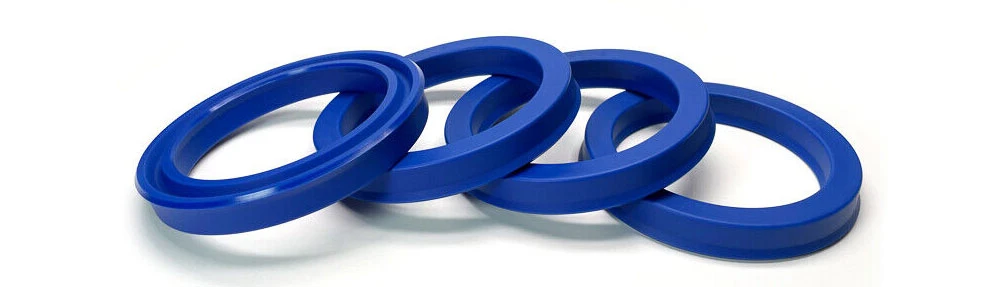
Distortion and flipping issues
Fault manifestation: The Y-ring seal is twisted or flipped during installation or use, resulting in seal failure.
Causes:
Excessive friction: The frictional torque of relative motion is greater than the torsion resistance of the Y-ring.
Improper Installation: Improper installation with the correct tools or methods was not used, resulting in distortion of the seal.
Solution:
Improve the hardness of the material: select the sealing ring material with high hardness to improve the torsion resistance.
Add a support ring: add a support ring at the root of the Y-ring to prevent it from twisting or flipping.
Standard installation: Use professional installation tools and methods to ensure that the seal ring is installed correctly.
Reverse pressure injury problems
Fault performance: Under high-pressure conditions, the Y-ring seal is damaged due to backpressure, resulting in leakage.
Causes:
Excessive working pressure: When the working pressure exceeds the bearing capacity of the sealing ring, backpressure damage will occur.
Wrong Mounting Orientation: If the Y-ring is installed in the wrong direction, it can also cause backpressure damage.
Solution:
Use Retaining Rings: In high-pressure conditions, use retaining rings to protect the Y-rings from being squeezed into the gap and damaged.
Correct installation: Make sure the Y-ring is installed in the correct direction to avoid backpressure damage.


