

As a common sealing material, rubber seals are widely used in various industrial fields. One of its striking features is its ability to expand when heated. LindePolymer will take a closer look at what causes rubber seals to swell and explain the mechanism by which expansion occurs.
Causes of expansion of rubber seals
- Thermal expansion coefficient: Different types of rubber materials have different thermal expansion coefficients. Some rubber materials have relatively high thermal expansion coefficients, which means that when a rubber seal is exposed to a high-temperature environment for a long time, its molecular chains will expand due to heat. The overall volume of the seal increases.
- Thermal energy conduction: Thermal energy conduction is another important factor that causes rubber seals to expand. When a rubber seal comes into contact with a heat source, heat energy will be transferred to the rubber material through conduction. This causes the thermal motion of the molecular chains within the rubber to become more intense, causing expansion.
- Thermal expansion differences: In various applications, rubber seals are used to join two or more components of different materials. Since different materials have different coefficients of thermal expansion, the difference in thermal expansion between these materials can also cause the rubber seal to expand when the temperature increases.
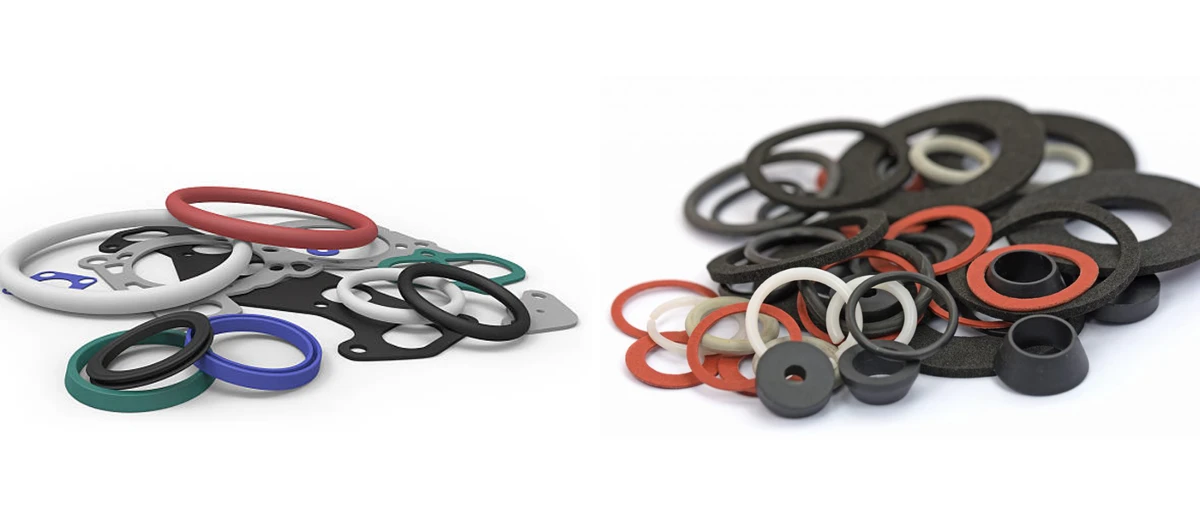
The mechanism of rubber seal expansion
- Thermal movement of molecular chains: The molecular chains of rubber materials will become more active in thermal movement when heated. This thermal movement weakens the interaction between molecular chains, causing the rubber seal to increase in volume.
- Cross-linked structure changes: The cross-linked structure in rubber materials will also undergo certain changes at high temperatures. The temperature increase caused by thermal expansion can cause the breakage and reorganization of the cross-linked structure, causing the expansion of the rubber seal.
- Changes in pore structure: The microscopic pore structure in rubber seals also changes when the temperature increases. Due to thermal expansion, these pores expand, causing the overall seal to increase in volume.
Application and significance
- Temperature compensation: The ability of rubber seals to expand makes them valuable in environments with large temperature changes. By rationally selecting rubber materials and designing the sealing structure, compensation for temperature changes can be achieved and the sealing effect can be better exerted.
- Improved sealing performance: The expansion of the rubber seal can increase the contact pressure with the connecting parts and improve the sealing performance. This has wide application in many industries, such as the chemical industry, petroleum, and automobile manufacturing.
- Technological innovation: In-depth research on the expansion mechanism of rubber seals can provide a basis for the development of new materials and improvements in sealing technology. By understanding the mechanism of rubber expansion, more efficient and reliable sealing systems can be designed to meet the temperature changes and sealing performance requirements of different industries.
in conclusion
The expansion of rubber seals is due to the combined effects of the thermal expansion characteristics of the rubber material, thermal energy conduction, thermal expansion differences, and other factors. Rubber seals expand when heated through thermal movement of molecular chains, changes in cross-linked structures, and changes in pore structure. This characteristic makes rubber seals have important application value in temperature compensation and sealing performance improvement. Research on the expansion mechanism of rubber seals not only contributes to technological innovation but also provides theoretical guidance for improving sealing materials and designing sealing systems.


