

What are the application limitations of elongation percentage on rubber materials?
The percentage of stretch rate has some limitations on the application of rubber materials. Here are some common limitations:
- Strength limitations: High stretch rubber materials usually sacrifice some strength. Although it has good ductility and elasticity, its tensile strength can be relatively low. This means that high stretch rubber materials may not be suitable in applications that need to withstand high tension or shear forces.
- Durability Limitations: High stretch rubber materials may creep or lose elasticity under long-term stress. Under some long-term loads or high temperature environments, rubber materials may deform, age, or lose their original properties. Therefore, the effect of stretch rate on the durability of rubber materials needs to be considered in applications that require long-term stable performance.
- Sealing performance limitations: Although rubber materials with high stretch rates can provide good sealing performance, in some cases, excessive stretch rates may cause excessive deformation and looseness between sealing surfaces. This may cause leaks or reduced sealing performance. Therefore, in some special sealing applications, it is necessary to select an appropriate stretch rate range according to specific requirements.
- Chemical Resistance Limitations: High stretch rubber materials may be more sensitive to certain chemicals. Some chemicals may cause rubber materials to swell, soften, deteriorate or lose their original properties. Therefore, the effect of stretch rate on the chemical resistance of rubber materials needs to be considered in applications that require contact with specific chemicals.
Next, let’s take a look at the common rubber materials with a stretch rate of 15%:
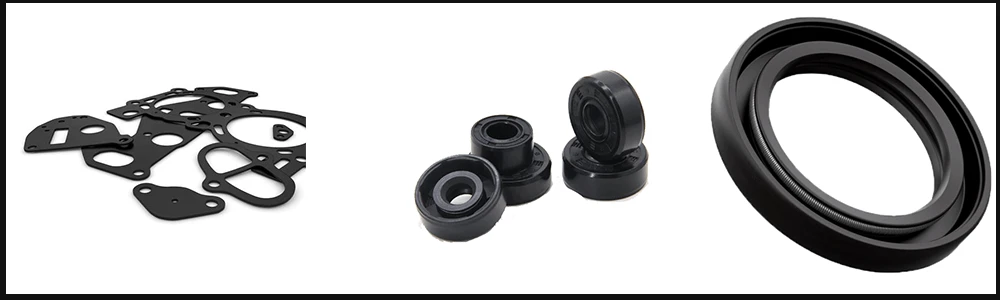
- Natural rubber (NR): Natural rubber is extracted from the latex of rubber trees and has good elasticity and tensile properties.
- Nitrile Butadiene Rubber (NBR): Nitrile Butadiene Rubber is a synthetic rubber with excellent oil and abrasion resistance and is commonly used in areas such as hydraulic seals and automotive parts.
- Styrene-butadiene rubber (BR): Styrene-butadiene rubber is a synthetic rubber with good wear resistance and cold resistance. It is commonly used in tires, rubber soles and other products.
- Ethylene-propylene rubber (EPDM): Ethylene-propylene rubber is a synthetic rubber with excellent weather resistance and chemical corrosion resistance. It is commonly used in seals, wire and cable insulation and other fields.
- Chloroprene (CR): Chloroprene is a synthetic rubber with good wear resistance and aging resistance. It is commonly used in rubber pipes, waterproof materials and other fields.
Different applications have different performance requirements for rubber materials, and other factors need to be considered comprehensively, such as hardness, temperature resistance, aging resistance, chemical stability, etc. Therefore, when selecting rubber materials, the most appropriate stretch rate range needs to be determined based on the requirements of the specific application.


