

The role of seals and their significance
In the hydraulic and pneumatic transmission system and its components, the function of placing sealing devices and sealing elements is to prevent the leakage of working medium and the intrusion of external dust and foreign matter. The element that is installed in the sealing device and plays the sealing role is called a seal.
When the working medium of hydraulic and pneumatic transmission flows or is temporarily stored in the cavity of the system and components, due to the change of pressure, intermittent, viscosity and other factors, a small amount of working medium crosses the boundary of the cavity and flows out from the high-pressure cavity to the low-pressure cavity or the outside world, and this phenomenon of "cross-border outflow" is called leakage.
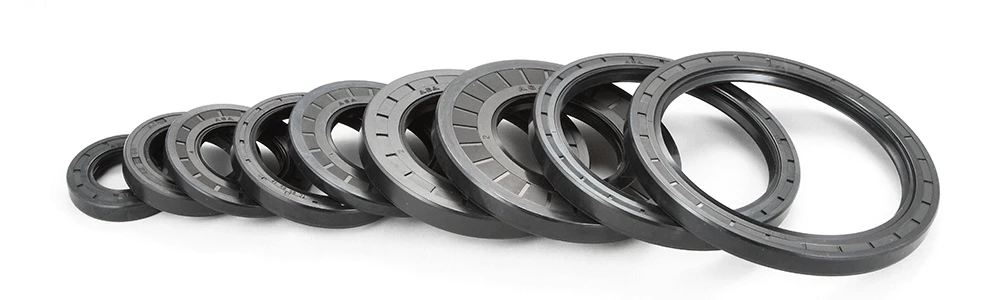
Leaks are divided into two categories: internal leaks and external leaks.
"Internal leakage" refers to the leakage of the working medium inside the system or element from the high-pressure chamber to the low-pressure chamber; External leakage is leakage from inside a system or component to the outside world.
For the hydraulic transmission system, the "internal leakage" will cause a sharp decrease in the volumetric efficiency of the system, which will not reach the required working pressure, so that the equipment cannot operate normally; External leakage causes waste of working medium and pollutes the environment, and even causes equipment operation failure and personal accidents.
For pneumatic transmission systems, gas leakage often does not get due attention because the working medium is compressed air and the working pressure is not high. In fact, the leakage in the pneumatic transmission system will also cause the system pressure to drop, the energy consumption to increase, the action to be disordered, or the negative pressure in the vacuum system can not be established; A leak in the cylinder intake will cause the cylinder to creep at low speeds, and so on.
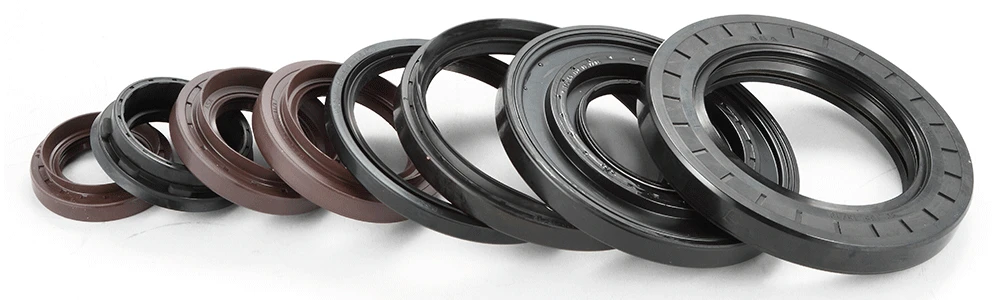
Sealing mechanism analysis
The dynamic seal cannot simply rely on the gap between the joint surfaces to achieve sealing, because the tighter the gap between the joint surfaces is sealed, the greater the friction resistance of the relative movement of the dual surface, resulting in the heating of the joint surface, affecting the formation of the lubricating oil film, and making the seal fail quickly.
Therefore, the study of the mechanism of dynamic sealing focuses on the mechanism of forming and maintaining a lubricating oil film between the joint surfaces, so that the sealing can be maintained without excessive friction.
Static sealing relies on closing the gap between the joint surfaces to achieve the sealing effect, and does not need to consider friction and wear. The leakage of the sealing surface is determined by the material properties of the sealing ring, the machining accuracy, roughness and compression degree of the mating surface.

With materials such as rubber and soft metals, it can be completely compressed with a small pressing force, thus preventing fluid leakage; For harder metal washers, sometimes the use of a large compression force can not be completely compressed, resulting in poor sealing, but such as reducing the surface roughness, increasing the real contact area of the surface, with a small compression force can also improve the sealing performance.
In order to keep the seal sealed under fluid pressure, the limit specific pressure value of the seal is usually specified in the design, which refers to the specific pressure when the seal can maintain the reliability of the seal under the action of fluid pressure.
Considering the qualitative relationship between the sealing force and the internal pressure (local nonlinearity), the initial sealing force should reach above the limit specific pressure equivalent to the limit specific pressure in actual use, so that it is safer to use.


