

What is a safety valve
Safety valves are a crucial safety feature in many industrial domains. Their purpose is to automatically open and release excess pressure to prevent equipment damage caused by excessive pressure when the system pressure above a predefined amount. In order to guarantee the security of industrial production, safety valves must be operated correctly. The O-type rubber sealing ring is an essential component of the safety valve in this procedure, since it is a straightforward and reliable sealing element.
Why choose O-type rubber sealing ring
O-type rubber sealing rings' distinct form and material qualities have made them the preferred option for sealing safety valves. O-rings offer dependable sealing performance, are inexpensive, and are simple to install. In a range of operating conditions, they can continue to have good sealing effects. Rubber O-rings are very elastic and flexible, adaptable to a variety of operating conditions and temperature swings, and have a considerable amount of vibration and pressure fluctuation dampening properties.
Material selection of O-type rubber sealing ring
The selection of a material is essential when selecting an O-ring rubber seal. When choosing a safety valve, it is important to take into account the working environment and medium properties since different rubber materials have varying chemical stability, temperature adaptability, and aging resistance.
1. Nitrile rubber (NBR)
One of the most often used O-ring materials is nitrile rubber. It is appropriate for most hydraulic and pneumatic systems and has strong resistance to heat and oil. It is not appropriate for situations with high levels of chemical corrosion, though.
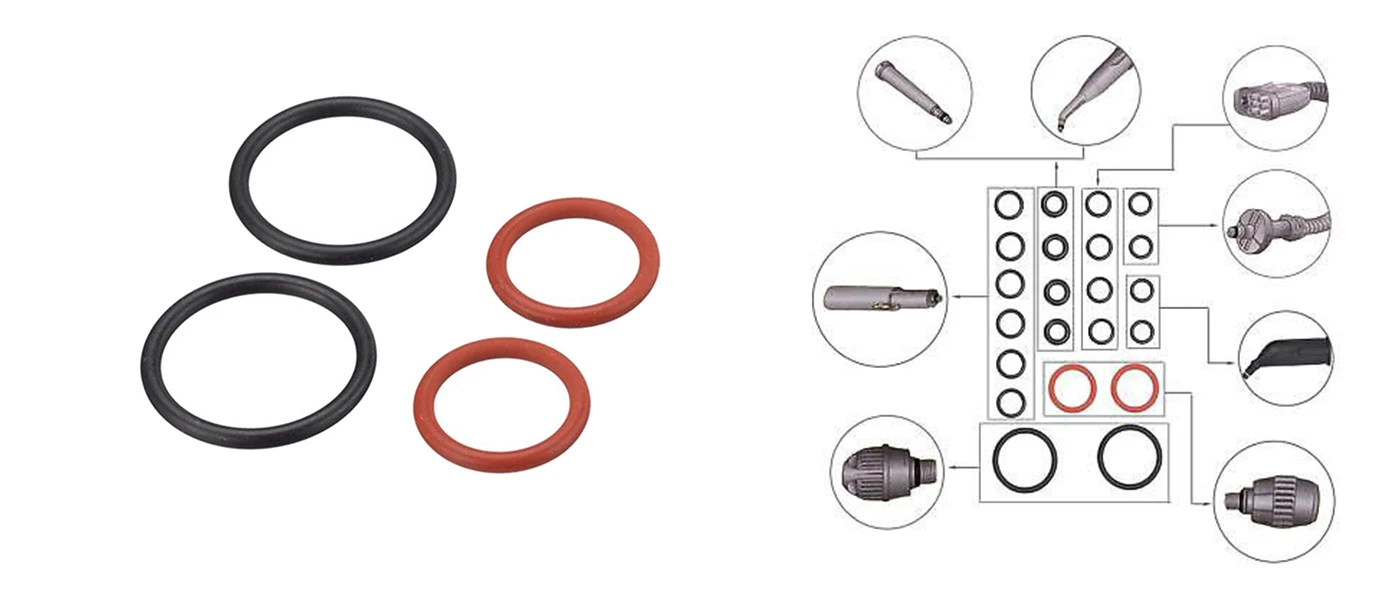
2. Silicone
In addition to being extremely resistant to most chemicals, silicone rubber exhibits good resilience to heat and cold. It is appropriate for situations requiring interaction with food-grade media or those with significant temperature fluctuations.
3. Fluorine rubber (Viton)
Fluorine rubber is ideal for high temperature and high pressure applications, as well as harsh chemical corrosion conditions because of its exceptional resistance to chemicals and oils. It is really expensive, though.
4. Ethylene propylene rubber (EPDM)
Since ethylene-propylene rubber resists heat, weather, and chemicals well, it may be used outside or in situations where steam and water may come into contact with it.
O-type rubber seal size selection
The precise installation measurements and safety valve pressure level must be taken into consideration when choosing the O-type rubber sealing ring size. An inadequate seal will result from a sealing ring that is either too big or too tiny. To guarantee correct O-ring selection and installation, manufacturers often include comprehensive dimensions data and installation instructions.
Installation and maintenance of O-type rubber seals
To guarantee the O-ring rubber seal's sealing effectiveness, installation must be done correctly. To prevent the O-ring from losing its form during installation, do not twist or stretch it. In addition, make sure the installation area is clear of debris and clean to avoid wearing down or damaging the sealing ring while working.
To guarantee the long-term effectiveness of the O-ring rubber seal, routine maintenance and inspection are also essential. You should look for signs of age, wear, and fractures in the sealing ring during examination. If required, promptly install a new sealing ring in its place.
In conclusion
To ensure the safe operation of industrial systems, O-type rubber seals must be used in safety valves. Both the O-ring's service life and the safety valve's operational efficiency may be successfully increased by sensible material selection, proper installation, and routine maintenance. To guarantee the system's dependability and safety, the features and specifications of the working environment must be carefully taken into account while choosing and utilizing O-type rubber seals.


