

How can I avoid early wear of rubber seals?
To avoid early wear of rubber seals, you can start from the following aspects:
Choose the right rubber material
Consider the working environment: choose the appropriate rubber material according to the actual working environment (such as temperature, pressure, medium, etc.). For example, fluoroelastomers (FKM) have excellent high temperature and chemical resistance, making them suitable for use in high-temperature and corrosive media environments; Silicone rubber (VMQ) exhibits good cold and weather resistance, making it suitable for low temperatures and outdoor use.
Material compatibility: Ensure that the rubber seal is compatible with the media it comes into contact with (such as hydraulic oil, gas, etc.) to avoid deterioration, expansion, or accelerated aging caused by incompatibility.
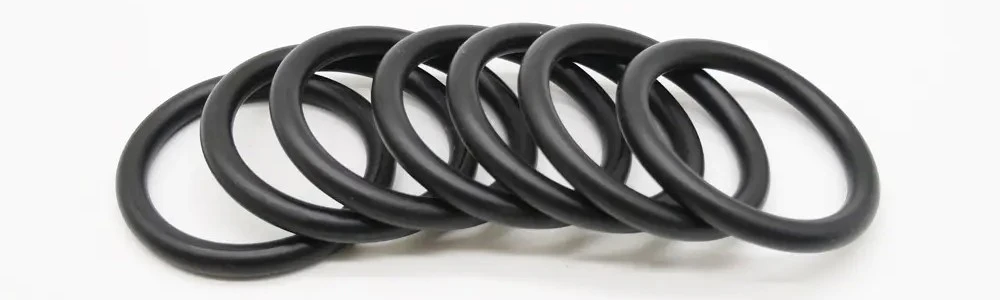
Optimize the design
Rational cross-sectional design: Optimize the cross-sectional shape of the seal to reduce stress concentration and wear.
Control dimensional tolerances: Ensure that the dimensional tolerances of seals meet the design requirements and avoid poor fit and wear caused by dimensional deviations.
Increase the compression ratio: Where possible, increase the compression ratio of the seal appropriately to enhance the sealing effect and reduce wear.
Install it correctly
Avoid scratching: During installation, avoid scratching the surface of the seal with sharp tools or improper handling.
Correct assembly: Ensure that the seals are assembled in the correct orientation and position to avoid wear and tear caused by assembly errors.
Avoid overstretching or twisting: During installation, avoid overstretching or twisting the seal to prevent damage to its internal structure and cause early wear.
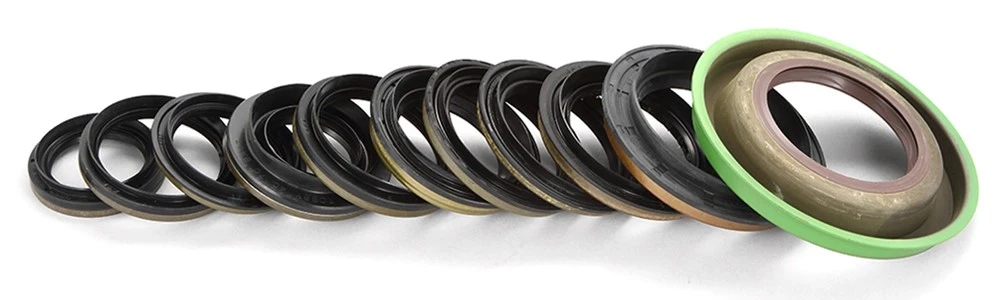
Regular maintenance and inspection
Regular inspection: Regularly inspect the rubber seals to find and deal with problems such as wear and aging over time.
Replacement cycle: According to the use and manufacturer's suggestions, formulate a reasonable replacement cycle, and replace the aging or seriously worn seals in time.
Cleaning and maintenance: keep the seal and its surrounding environment clean to avoid damage to the seal by impurities and corrosive substances.
Improve the use environment
Control the temperature: Where possible, control the temperature of the operating environment to avoid excessive or low temperatures that adversely affect the rubber seals.
Vibration Reduction: Take steps to reduce equipment vibration to reduce shock and wear on rubber seals.
Protective measures: For seals that are susceptible to direct sunlight or corrosive substances, take appropriate protective measures, such as installing sun shields or applying protective layers.
In summary, through the selection of appropriate rubber materials, optimized design, correct installation, regular maintenance and inspection, and improvement of the use environment, the early wear of rubber seals can be effectively avoided, their service life can be prolonged and the operating efficiency of the equipment can be improved.


