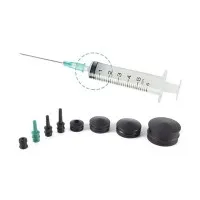


Medical piston components Description
Medical piston components are key components in medical devices, which are widely used in a variety of medical devices such as syringes, infusion pumps, and ventilators. These components must be designed and manufactured to meet strict medical standards and regulations to ensure their safety, reliability, and performance.
Functions of medical piston assemblies
The primary function of medical piston assemblies is to provide precise fluid control in medical devices. In syringes, the piston is used to control the amount of drug injected; In an infusion pump, it controls the rate of infusion; In ventilators, the piston is used to regulate the breathing airflow.
Design requirements
Precision: The piston assembly must be able to control the amount of fluid precisely with a minimal margin of error.
Biocompatible: The material must be compatible with human tissues and not cause an immune response or toxicity.
Chemical resistance: Resistant to detergents and disinfectants.
Durability: Maintains stable performance over repeated use.
| Product name | Medical piston components |
| Product material | Silicone rubber, PTFE |
| Hardness (Shore A) | 60 to 90 Shore A |
| Applicable temperature °C | Normal temperatures |
| Color | Black, orange, blue, yellow, green, custom |
| Size | Standard/ Custom |
| Advantage | High-temperature resistance, wear resistance, corrosion resistance |
| Application | Medical syringes, infusion pumps, and ventilators |
| Certification | ISO: 9001, ISO: 14001, IATF: 16949 |
Material selection
The following materials are commonly used for medical piston assemblies:
Stainless steel: Corrosion-resistant, high-strength, often used in components that need to withstand high pressures.
Plastics: such as polytetrafluoroethylene (PTFE), have good sliding properties and biocompatibility and are often used in applications where friction reduction is required.
Silicone rubber: Soft and suitable for applications that require sealing properties.
Manufacturing process
Precision machining: ensures a tight fit between the piston and the cylinder block.
Surface treatment: such as polishing, and coating to reduce friction and improve corrosion resistance.
Aseptic Processing: Components are subjected to rigorous aseptic treatment after manufacturing to meet the requirements of medical use.
Quality control
Inspection standards: Follow international medical device standards such as ISO or FDA.
Performance test: including withstand voltage test, sliding performance test, and chemical stability test.
Biocompatibility assessment: to ensure that the material will not cause adverse reactions to the human body.

Fields of application
Syringe: Used for drug injection or aspiration.
Infusion pumps: control the delivery rate of drugs or nutrient solutions.
Ventilator: Regulates respiratory airflow and assists breathing function.
Surgical instruments: control fluid delivery in minimally invasive surgery.
Trends
With the development of medical technology, medical piston components are developing in the direction of higher precision, higher performance, and more intelligence. For example, a smart infusion pump can monitor the infusion rate in real-time and automatically adjust it to suit the patient's needs.
Conclusion
Medical piston assemblies are an integral part of medical devices and are designed and manufactured to the highest standards. As technology advances, the performance of these components will continue to improve, providing patients with safer and more effective treatments.
From the above, we can see the importance of piston components in the medical field and the role they play in ensuring patient safety and improving treatment outcomes. As the medical industry continues to grow, so will the demand and performance requirements for these components.
Hot Tags: medical piston components, China medical piston components manufacturers, suppliers, factory, Medical Syringe Piston, Medical Rubber Piston, Air Water O Ring For Syringe, Door and Boot Long Wiring Grommet, 90 Degree Long Wiring Boot Grommet, Tire SBR Rubber Seal Ring