

In high-temperature environments, the performance stability of PTFE seals (PTFE) is a key factor in ensuring the safe operation of industrial equipment. Known for its excellent high-temperature performance, chemical stability, and low coefficient of friction, PTFE is the sealing material of choice for many high-temperature applications. However, with the development of science and technology and the improvement of industrial demand, higher requirements are put forward for the performance stability of PTFE seals at high temperatures.

Performance stability issues in high-temperature environments
Thermal expansion and deformation
Although PTFE has good dimensional stability at high temperatures, small thermal expansion or deformation can still occur under extreme high-temperature conditions (e.g., over 260°C), which can affect the sealing effect.
Chemical attack
While PTFE has excellent resistance to most chemicals, its chemical stability can be challenged in certain extreme or specific chemical environments, such as in the presence of strong oxidizing agents.
Changes in mechanical strength
Long-term high-temperature use may lead to a decrease in the mechanical strength of PTFE seals, which in turn affects their sealing performance and service life.
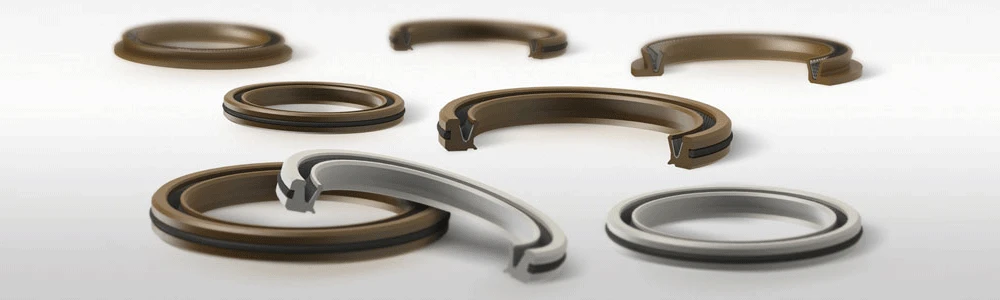
Solution
Material modification
PTFE is modified by introducing reinforcing fibers (e.g., glass fibers, carbon fibers) or nanoparticles to improve its high-temperature resistance and mechanical strength. For example, nanocomposite PTFE materials can maintain good dimensional stability and mechanical properties above 300°C.
Optimize the structural design
Design a more reasonable sealing structure, such as the use of multi-layer composite sealing structure, the use of different materials to complement each other, improving the overall sealing performance. At the same time, the heat dissipation design is increased to reduce the local high temperature of the seal and prolong the service life.
Regular inspection and maintenance
Establish a regular inspection and maintenance mechanism, conduct regular inspections of PTFE seals in high-temperature environments, and find and deal with potential problems in a timely manner. Modern detection technologies, such as infrared thermography, are used to monitor the temperature distribution of seals and prevent thermal expansion and deformation.
Hot topics are integrated
At present, with the global emphasis on environmental protection and sustainable development, the production and use of PTFE seals also need to consider environmental protection factors. The adoption of green manufacturing processes to reduce carbon emissions and waste generation in the production process is an inevitable trend for future development. At the same time, the development of recyclable PTFE seals to realize the recycling of resources is also a hot topic of concern in the industry.


