



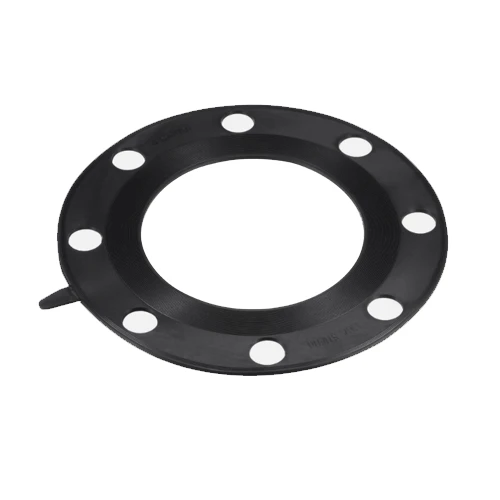

Linde Polymer Tec Co.,Ltd. is one of the most experienced manufacturers and suppliers of automobile flange seals in China, also supports customized service. Please feel free to buy high quality automobile flange seals for sale here from our factory.
Products Description
Automobile flange seals
Automobile flange seals refer to sealing devices used in automobile engines, transmission systems, and other hydraulic systems. Its main function is to prevent liquid or gas leakage and ensure the system's normal operation.
Automotive flange seals are usually made of elastic materials such as rubber or silicone. They are designed to connect with flanges and form a seal between the two contact surfaces. This seal can withstand high pressures and temperatures and is resistant to wear and chemicals.
In automobile engines, flange seals are mainly used to seal the interface between the cylinder head and the cylinder block to ensure the sealing of the combustion chamber. They can also seal off connection points in exhaust systems to prevent exhaust gas leaks.
In transmission systems, flange seals often close the connection point between the drive shaft and the transmission case. This ensures that liquid transmission media (such as lubricating oil or transmission fluid) does not leak and keeps the transmission system functioning properly.
When flange seals are damaged or aged, liquid or gas leaks may occur, affecting system performance and reliability. Therefore, regular inspection and replacement of flange seals is one of the important steps to maintain vehicle performance and safety.
Technical data
Material: NBR
|
Test Method
|
Norm
|
Test Values
|
|
Hardness |
ISO 868 SB
|
70 ± 5 IRHD
|
|
Specific Weight
|
ISO 2781
|
1,27
|
|
Tensile Strength at break
|
ISO 37
|
13 N/mm2
|
|
Elongation at break
|
ISO 37
|
300%
|
|
Compression Set
70h/23°C
48h/70°C
48h/110°C
|
ISO 815 A
|
20% 14% 20% |
|
Immersion in FAM DIN 51604 2/B
48h/23°C
Hardness Change
Volume Change
|
ISO 1817 |
-17% +36% |
|
Immersion in Diesel, 48h/23°C
Hardness Change
Volume Change
|
ISO 1817 |
-1% +2% |
|
Immersion in Biodiesel DIN 51606
48h/23°C
Hardness Change
Volume Change
|
ISO 1817 |
-3% +3% |
Products materials Description
Materials commonly used for automotive transmission flange seals include
Rubber (NBR): Nitrile rubber is a commonly used sealing material with good oil resistance and wear resistance. It is suitable for general applications in transmission systems.
NBR also has some restrictions and considerations
Low-temperature performance: NBR has poor low-temperature resistance. When the temperature drops to a lower range, it may become hardened and brittle, resulting in a decrease in sealing performance. Therefore, special attention is required when using it in cold environments.
Compatibility: NBR may be incompatible with certain chemicals and lubricants, which may cause the material to swell, harden, or become brittle. When selecting an NBR seal material, confirm its compatibility with the lubricants and chemicals used in the drive system.
- Polypropylene (PP): Polypropylene is a plastic material with good chemical and abrasion resistance. It is often used as one of the materials for transmission flange sealing.
- Polytetrafluoroethylene (PTFE): PTFE is a material with good high-temperature resistance and chemical stability. It performs well in high-temperature and pressure environments and has good compatibility with lubricants and chemicals.
- EPDM: EPDM is a rubber material with good high-temperature resistance and ozone resistance. It is commonly used in sealing applications in drivetrains that need to withstand high temperatures and the effects of chemicals.
EPDM rubber/polypropylene composite material: This composite material combines the advantages of EPDM rubber and polypropylene and has good oil resistance, high-temperature resistance, and wear resistance.
Products Performance Description
The performance description of automotive transmission flange seals usually includes the following aspects

- Sealing performance: The main function of the transmission flange seal is to ensure that liquid or gas does not leak. Therefore, sealing performance is one of the key indicators to evaluate its performance. A good drive flange seal should effectively seal the interface and prevent leakage of liquid or gas.
- Oil resistance: The sealing materials used in the transmission system should have good oil resistance and be able to maintain their performance and sealing effect when exposed to lubricating oil and other lubricating media. This is because transmission systems often involve the presence of lubricating oil, and poor oil resistance may cause the sealing material to expand, harden, or become brittle, thereby reducing sealing performance.
- Wear resistance: Flange seals in transmission systems usually need to withstand high-speed rotation and friction, so they need to have good wear resistance. Sealing materials should be able to resist friction and wear and maintain their sealing effectiveness and longevity.
- High-temperature resistance: Sealing materials in drive systems need to be able to withstand working conditions in high-temperature environments. This includes high temperatures, high pressures, and high speeds in the engine driveline. Good high-temperature resistance can ensure that the sealing material maintains its elasticity and sealing performance under high-temperature conditions.
- Chemical stability: Sealing materials should have good chemical stability and be able to resist erosion and corrosion from chemical substances. Various lubricants, coolants, and chemicals may be present in the driveline, so the sealing material should be compatible with these substances and maintain their performance.
The above is a general description of the sealing performance of automobile transmission flange. When selecting and evaluating a specific transmission flange seal, it is also necessary to consider the specific operating conditions and requirements and follow the vehicle manufacturer's recommendations and specifications.
When selecting the material for the automotive transmission flange seal, you need to consider the following factors:
- Working conditions: First of all, the working conditions of the transmission system must be considered, including temperature, pressure, speed, and working medium. Different working conditions have different requirements for sealing materials. For example, high-temperature environments may require the selection of high-temperature-resistant materials, while high-pressure environments may require the selection of materials with higher strength.
- Oil resistance: Since the transmission system involves lubricating oil and other lubricating media, the sealing material needs to have good oil resistance to maintain its performance and sealing effect. Common oil-resistant materials include rubber (such as nitrile rubber) and polytetrafluoroethylene (PTFE).
- Wear resistance: Flange seals in transmission systems need to be able to withstand high-speed rotation and friction, so they need to have good wear resistance. Wear-resistant materials extend seal life and reduce the risk of leaks. Some wear-resistant materials include polypropylene and polyether ketone.
- Chemical stability: The sealing material should have good chemical stability and be able to resist the erosion and corrosion of chemical substances. Various lubricants, coolants, and chemicals may be present in drivetrains, so materials should be compatible with these substances and maintain their performance. Materials such as polypropylene, PTFE, and EPDM generally have good chemical stability.
- Cost and Availability: Finally, cost and material availability are also factors to consider. The cost and availability of different materials may vary, chosen based on specific needs and budgets.
Hot Tags: automobile flange seals, China automobile flange seals manufacturers, suppliers, factory, Viton Rubber Gasket, Cylinder Gasket Seals, Pump Casing Gaskets, Clutch Pressure Plate Rubber Gaskets, Cable Gland Connector Rubber Gasket, Dustproof Rubber Gasket


