

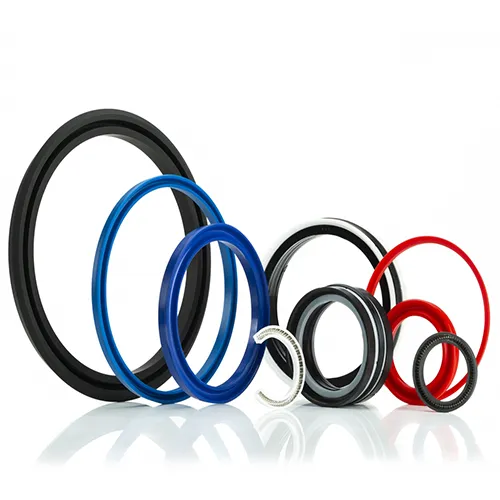
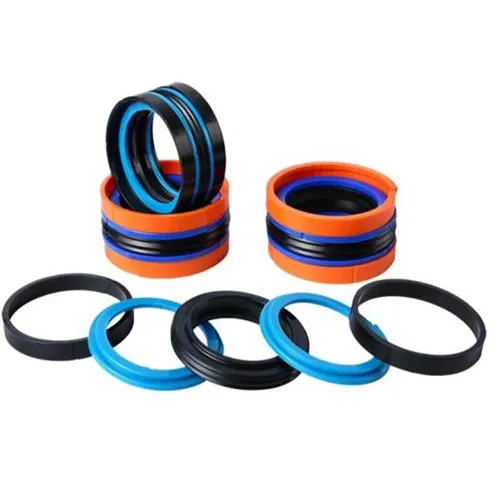
Description of HNBR Single Acting Piston Seals
Special features
-
High Mechanical Strength: HNBR is a synthetic polymer made from hydrogenated nitrile butadiene rubber (NBR) and has excellent mechanical properties, especially high tensile strength.
- Wide Temperature Range: HNBR seals can operate in a temperature range of -32°C to +150°C, making them suitable for extreme temperature conditions.
- Wear resistance and fatigue resistance: HNBR material has high wear resistance and fatigue resistance and can withstand frequent piston movement and reciprocating motion without being prone to wear and fatigue.
- Pressure resistance: HNBR single-acting piston seals can withstand pressures up to 400 bar and are suitable for high-pressure applications.
- Balance of performance and cost: Although HNBR is a relatively expensive material, its high-performance characteristics make it the material of choice in many demanding applications, especially in applications such as automotive engine timing belts.
Common application scenes
High-pressure environment: HNBR single-acting piston seals can withstand pressures up to 400 bar (approximately 5800 psi) and are suitable for high-pressure hydraulic cylinders.
Single-acting cylinders: Single-acting piston seals are designed for hydraulic cylinders that are pressurized on only one side, such as those with oil on the pressure side and open to the atmosphere on the opposite side.
Heavy machinery: In heavy machinery, such as excavators, cranes, etc., single-acting piston seals can effectively prevent hydraulic oil leakage while reducing maintenance times and extending equipment life.
Automotive industry: HNBR single-acting piston seals can be used in automotive hydraulic braking systems, suspension systems, transmissions, and engines.
Industrial Hydraulic Equipment: Single-acting piston seals are suitable for a variety of industrial hydraulic equipment, such as hydraulic cylinders, hydraulic pumps, and hydraulic valves.
Oil and Gas Industry: HNBR single-acting piston seals are widely used in the oil and gas industry. They can be used in critical areas such as oil well equipment, oil drilling rigs, compressors, and piping systems to ensure system reliability and sealing performance.
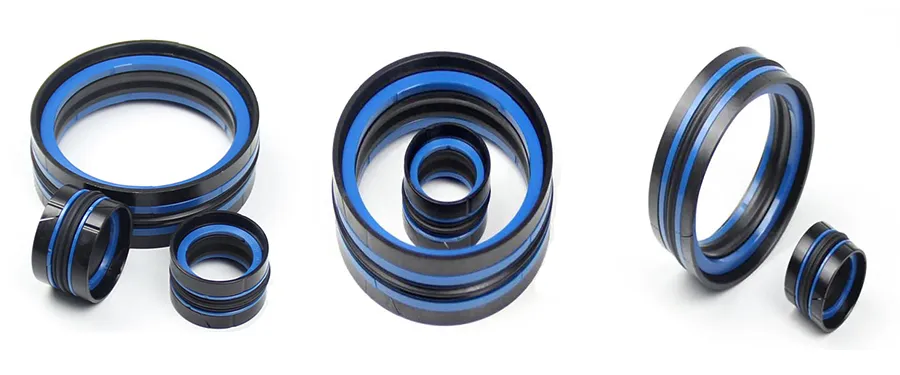
Physical property information
| ORIGINAL PROPERTIES | ASTM D2000 Requirements | Typical Test Results |
| Hardness, Shore A | 70 +/- 5 | 68 |
| Tensile Strength, psi | 1,440 min. | 2200 |
| Ultimate Elongation, % | 200 min. | 225 |
| HEAT RESISTANCE – A26, ASTM D 573 (70 hrs. @ 150 °C) | ASTM D2000 Requirements | Typical Test Results |
| Hardness Change, points | + 10 | +8 |
| Tensile Strength Change, % | -26 | -1 |
| Ultimate Elongation Change, % | -31 | -23 |
| COMPRESSION SET – B16, ASTM D 325 Method B (22 hrs. @ 150 °C) | ASTM D2000 Requirements | Typical Test Results |
| Permanent Set % | 30 max. | 8 |
| FLUID RESISTANCE –ASTM #1 Oil – EO16, ASTM D 471 (70 hrs. @ 100°C) | ASTM D2000 Requirements | Typical Test Results |
| Hardness Change, points | -5 to +10 | -2 |
| Tensile Strength Change, % | -20 max. | +4 |
| Ultimate Elongation Change, % | -30 max. | -17 |
| Volume Change, % | +/- 5 | +0.3 |
| LOW TEMP. RETRACTION – ASTM D 1329 | ASTM D2000 Requirements | Typical Test Results |
| TR-10, °C | - | -28 |
Production Process
1. Material preparation: Select high-quality HNBR rubber materials suitable for the manufacture of HNBR seals. Ensure materials meet required physical and chemical properties.
2. Mold design and manufacturing: According to the design requirements of the seal, design and manufacture the mold for manufacturing piston seals. Molds are usually made of metal or plastic and have the desired shape and size.
3. Rubber mixing: Mix HNBR rubber materials with other additives and reinforcing agents to obtain the required rubber mixture. The mixing process is usually carried out in a rubber mixer to ensure that the materials are evenly mixed.
4. Mold injection molding: Put the rubber mixture into the prepared mold. High pressure and appropriate temperatures are then applied to allow the rubber to fill the mold and obtain the desired seal shape.
5. Post-processing: Remove the injection molded seal from the mold and perform post-processing steps. This may include trimming excess rubber, performing surface treatments such as coating, and performing necessary inspections and tests.
6. Quality control: Quality inspection and testing of manufactured HNBR single-acting piston seals. This includes checking size, appearance, and performance to ensure the seal meets specifications.
The above steps only provide a general overview to demonstrate the typical production process of HNBR single-acting piston seals.
If you would like more information about this product, please contact us.
Hot Tags: hnbr single acting piston seals, China hnbr single acting piston seals manufacturers, suppliers, factory, Aviation AEM Rubber Seals, FVMQ Rubber Washers, Missile Launcher VITON Sealing O Rings, Plumbsure Rubber O ring, Aerospace HNBR Rubber Seals, Rubber Seals For Aircraft


